

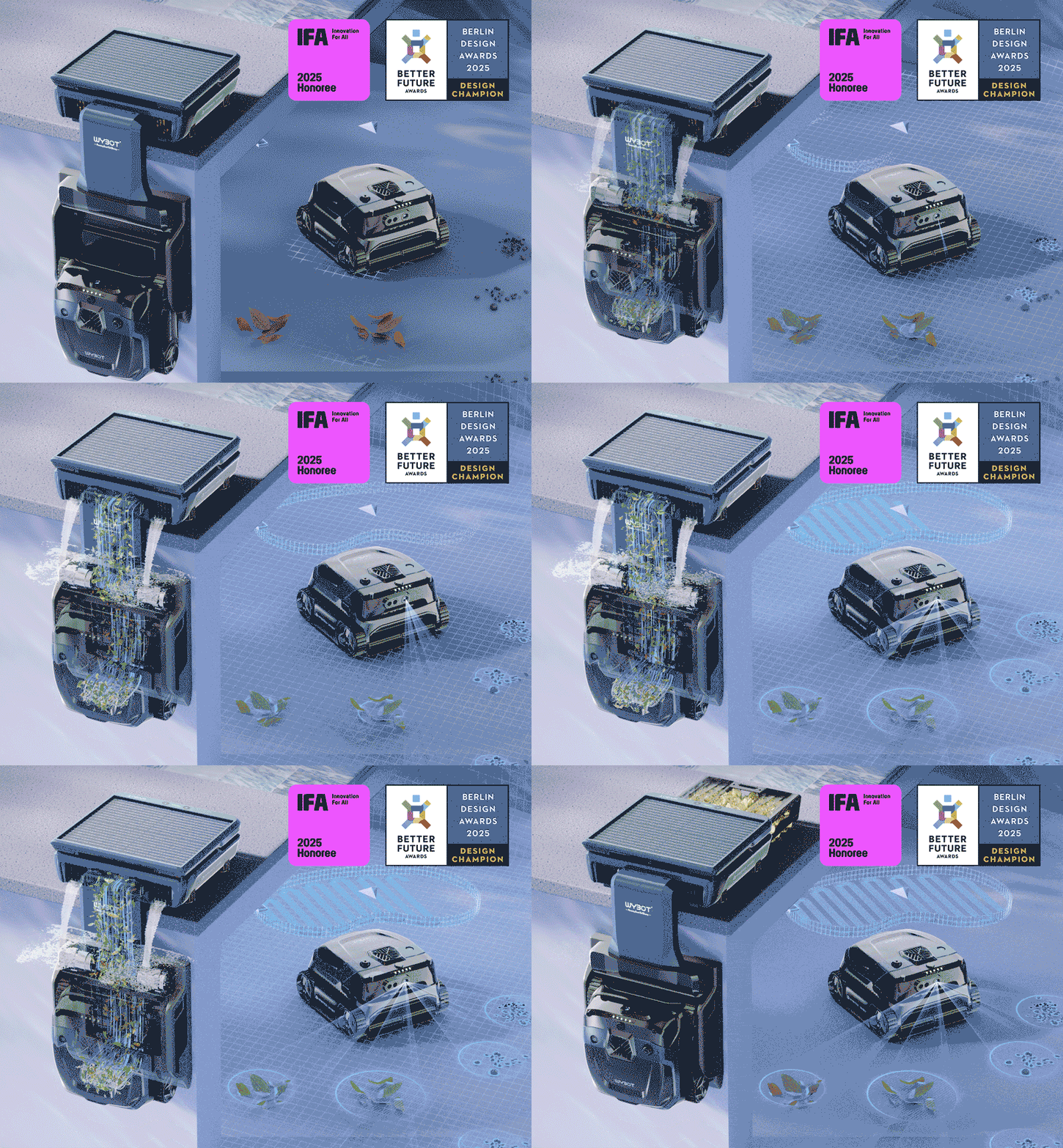
Maintaining a clean pool is essential for ensuring safe and enjoyable swimming. Whether you own an in-ground or above-ground pool, one of the most crucial tasks in pool care is cleaning. In the past, pool owners relied on traditional pool cleaners like manual vacuum heads and suction-based systems connected to the pool’s filtration system. However, with advances in technology, cordless pool cleaners have become increasingly popular due to their convenience and efficiency. In this article, we will compare cordless pool cleaners to traditional models to help you decide which one is right for you.
1. What is a Cordless Pool Cleaner?
A cordless pool cleaner is a modern, autonomous cleaning device that operates without the need for a power cord or hose. These cleaners come equipped with an internal rechargeable battery, allowing them to function independently from your pool’s filtration system. Cordless pool cleaners are typically lightweight and easy to use, making them ideal for smaller or medium-sized pools.
There are two main types of cordless pool cleaners:
-
Battery-Powered Pool Cleaners: These rely on rechargeable batteries to power the cleaner. The battery provides enough energy to clean your pool for a few hours before needing a recharge.
-
Robotic Pool Cleaners: These are more advanced and are equipped with motors, sensors, and built-in software to autonomously clean your pool. They can be programmed to clean specific areas and are highly efficient at removing debris from both the floor and walls of the pool.

2. What is a Traditional Pool Cleaner?
Traditional pool cleaners, often referred to as corded pool cleaners, generally require a connection to the pool’s filtration system to operate. These include manual vacuum heads, automatic suction cleaners, and pressure-side cleaners.
-
Manual Pool Cleaners: Manual vacuum heads are attached to a telescopic pole, and the user manually moves the vacuum across the pool floor to remove debris. This method requires effort and time but gives the user full control over the cleaning process.
-
Automatic Pool Cleaners: These cleaners are connected to your pool’s filtration system and move around the pool autonomously, cleaning debris as they go. They can be suction-based (requiring a connection to the pool pump) or pressure-based (operating with the pressure of water from the pump).
3. Cordless Pool Cleaners vs. Traditional Models: Key Differences
While both cordless pool cleaners and traditional models serve the same purpose—cleaning the pool—they differ significantly in terms of convenience, cost, performance, and ease of use.
3.1 Convenience and Ease of Use
Cordless Pool Cleaners:
-
No Cords or Hoses: One of the most significant advantages of cordless pool cleaners is their lack of cords or hoses. Without these cumbersome attachments, cordless cleaners are much more maneuverable and easy to store. They can be placed directly into the pool without worrying about managing hoses or tangling cords.
-
Fully Autonomous: Robotic cordless cleaners can operate autonomously, meaning you can set them to clean your pool and leave them to do the work while you relax. You don’t need to be present to control them, which makes them incredibly convenient, especially for busy pool owners.
-
Portability: Cordless models are lightweight and portable. You can easily remove them from the pool once they’ve finished cleaning, and they are much easier to transport than traditional models.
Traditional Pool Cleaners:
-
Requires Power Source: Traditional pool cleaners require either a connection to the pool’s filtration system or an external power source. This makes them less convenient, as they are limited by the reach of the hose or cord.
-
Manual Labor: Manual pool cleaners require the user to be present for operation and to move the vacuum across the pool floor. This can be time-consuming and physically demanding.
-
Limited Mobility: Automatic cleaners, while better than manual ones, are still restricted by their hose or cord, which can limit their mobility and effectiveness in certain areas of the pool.
3.2 Cleaning Efficiency
Cordless Pool Cleaners:
-
Advanced Features: Robotic cordless pool cleaners are equipped with smart sensors, programming, and advanced navigation systems, allowing them to efficiently clean both the floor and walls of the pool. These cleaners are designed to ensure that no area of the pool is left untouched, providing a thorough clean every time.
-
Floor and Wall Cleaning: Many robotic cordless pool cleaners are designed to scrub both the floor and the walls of the pool, ensuring that debris is removed from all surfaces. This makes them ideal for pools with tiles or irregular shapes.
-
Efficiency: Cordless models are often faster and more efficient than traditional automatic cleaners because they are specifically designed for cleaning the entire pool, including hard-to-reach areas.
Traditional Pool Cleaners:
-
Less Efficient for Walls: While some automatic cleaners can clean the pool walls, they generally do a less thorough job than robotic models. Traditional vacuum heads often require manual labor to clean the walls.
-
Suction-Based Limitations: Suction-based cleaners are highly effective for debris removal but tend to get clogged with larger debris, reducing their overall efficiency. Pressure-side cleaners can sometimes handle larger debris, but they still rely on the pool’s filtration system to function properly.
3.3 Cost
Cordless Pool Cleaners:
-
Higher Initial Cost: Cordless pool cleaners, especially robotic models, tend to have a higher initial cost compared to traditional models. The advanced technology, battery system, and autonomous features contribute to the price.
-
Low Operating Costs: Once you purchase a cordless cleaner, the operating costs are relatively low. The rechargeable batteries don’t require frequent replacement, and the cleaner doesn’t rely on your pool’s filtration system, which could save you on electricity and water costs.
Traditional Pool Cleaners:
-
Lower Initial Cost: Traditional pool cleaners, such as manual vacuum heads and suction-based cleaners, are generally less expensive upfront. If you are on a tight budget, these may be a more affordable option.
-
Higher Operating Costs: Automatic suction or pressure-based cleaners may increase your energy bills because they require the pool’s filtration system to operate. Manual cleaners can also be more labor-intensive, potentially requiring additional products such as vacuum bags or replacement parts.
3.4 Maintenance and Longevity
Cordless Pool Cleaners:
-
Low Maintenance: Cordless pool cleaners typically require less maintenance than traditional models. Since they don’t rely on the pool’s filtration system, they avoid many of the issues associated with clogging and wear and tear on the pump.
-
Battery Life: The main form of maintenance for cordless pool cleaners involves taking care of the battery and ensuring it is charged. Some models may need a new battery after a few years of use, but this is usually a low-cost maintenance task.
Traditional Pool Cleaners:
-
Higher Maintenance Needs: Traditional pool cleaners, particularly automatic suction and pressure-side models, require regular maintenance to ensure they are operating effectively. This includes cleaning the pump basket, checking hoses for leaks, and maintaining the filtration system.
-
Replacement Parts: Over time, traditional models may need new parts, such as hoses, brushes, or wheels, which can add to the overall cost of ownership.
4. Which One is Right for You?
Choosing between a cordless pool cleaner and a traditional model ultimately depends on your specific needs, preferences, and budget. Here are a few factors to consider when making your decision:
-
For a Low Maintenance Option: If you want a cleaner that requires minimal involvement from you, a cordless robotic pool cleaner is likely the best choice. These models are highly efficient and do all the work autonomously, saving you time and effort.
-
For a Budget-Friendly Option: If you are on a tight budget and need a reliable option for basic pool cleaning, a traditional manual vacuum or automatic suction cleaner may be the better choice. These models are effective for cleaning the pool, but they require more time and effort on your part.
-
For Larger Pools with Complex Shapes: If you have a larger or more complexly shaped pool, a robotic cordless pool cleaner is ideal. These cleaners are designed to clean all areas of the pool, including the walls, and can adapt to various pool shapes and sizes.
-
For Smaller Pools: If you have a small above-ground pool and want an easy-to-use option that doesn’t require much time or effort, a cordless battery-powered pool cleaner might be the best fit. These are ideal for cleaning smaller areas with minimal hassle.

Both cordless pool cleaners and traditional models have their advantages and disadvantages. Cordless pool cleaners offer convenience, autonomy, and efficient cleaning, but they come with a higher initial cost. Traditional pool cleaners are more affordable upfront but may require more maintenance and effort. Ultimately, the right choice depends on your specific pool size, cleaning needs, budget, and preference for ease of use. No matter which option you choose, maintaining a clean pool is crucial for ensuring a safe and enjoyable swimming experience.


