

Keeping a swimming pool clean is essential for maintaining water quality, safety, and overall enjoyment. However, pool maintenance can quickly become time-consuming if you rely on outdated or inefficient equipment. One of the most common decisions pool owners face today is whether to choose a corded or cordless pool cleaner.
Both options offer unique advantages and limitations, and understanding these differences is key to saving time and reducing effort. In this comprehensive guide, we compare corded and cordless pool cleaners across performance, convenience, maintenance, and overall efficiency, helping you make an informed decision based on real-world usage and expert insights.
What Is a Corded Pool Cleaner?
A corded pool cleaner is a device powered by an external electrical source, typically connected through a floating cable to a power supply unit. These cleaners are often robotic and designed to operate continuously without worrying about battery limitations.
Corded models are known for their consistent power output, which allows them to deliver strong suction and extended cleaning cycles. They are especially popular for large in-ground pools where longer operation times are required.
However, the presence of a cord introduces certain challenges, such as cable tangling and limited mobility, which can affect overall user experience.
What Is a Cordless Pool Cleaner?
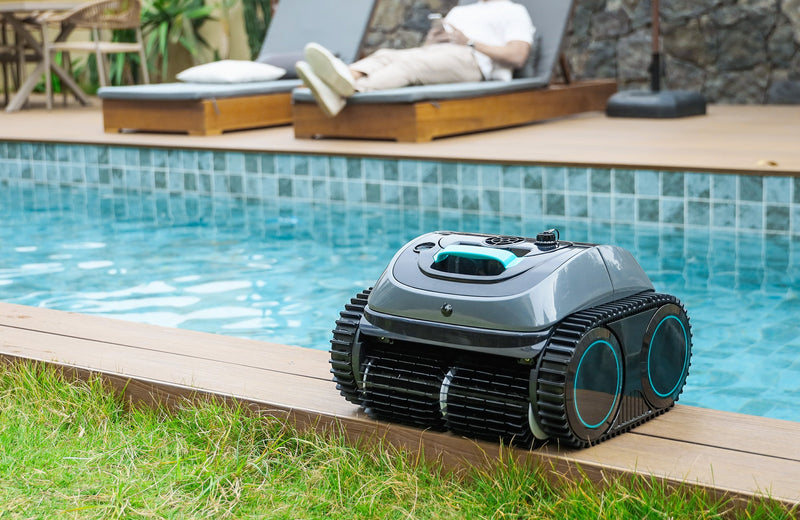
Cordless pool cleaners operate using rechargeable batteries, eliminating the need for external power cords. These devices are designed for convenience, portability, and ease of use.
Most cordless models are robotic and feature built-in navigation systems that allow them to move autonomously across the pool floor and walls. Without a cable, they can maneuver more freely and avoid common issues like tangling or restricted movement.
Battery technology has improved significantly in recent years, enabling longer runtimes and more efficient cleaning cycles. This makes cordless cleaners an increasingly popular choice for modern pool owners.

Performance Comparison: Power and Cleaning Efficiency
When comparing performance, corded pool cleaners have traditionally held an advantage due to their uninterrupted power supply. They can operate for extended periods, making them ideal for deep cleaning large or heavily soiled pools.
Cordless cleaners, while slightly limited by battery life, have made significant progress in closing the performance gap. Many high-quality models now offer powerful suction and intelligent cleaning patterns that ensure thorough coverage within a single cycle.
For most residential pools, cordless cleaners provide more than enough power to achieve excellent cleaning results. The difference becomes more noticeable in very large pools or commercial settings.
Time Efficiency: Which Saves More Time?
Time efficiency depends not only on cleaning speed but also on setup, operation, and maintenance. Corded cleaners often require more setup time, including connecting the power unit and managing the cable.
During operation, users may need to monitor the cable to prevent tangling, which can interrupt the cleaning process. Retrieving and storing the cable after use also adds to the overall time investment.
Cordless pool cleaners excel in this area. With no cables to manage, they can be deployed quickly—simply place the device in the water and start cleaning. After the cycle is complete, retrieval is straightforward and hassle-free.
For users seeking a quick and effortless cleaning routine, cordless models generally save more time.
Ease of Use and Convenience
Convenience is a major factor for homeowners with busy schedules. Corded cleaners, while powerful, can be less user-friendly due to the need for cable management and power connections.
Cordless cleaners are designed with simplicity in mind. Features like one-button operation, lightweight construction, and automatic parking make them easy to use for both beginners and experienced users.
Additionally, the absence of a cord enhances safety, especially in households with children or pets.
Maintenance and Upkeep
Both types of pool cleaners require regular maintenance, but the process differs slightly. Corded cleaners involve managing both the device and the cable. Over time, cables may wear out or require careful storage to prevent damage.
Cordless cleaners eliminate cable-related maintenance but introduce battery care as a new consideration. Users must ensure proper charging practices and occasionally replace the battery after extended use.
In general, cordless models offer a simpler maintenance routine, as they have fewer external components to manage.
Mobility and Coverage
Mobility plays a crucial role in cleaning efficiency. Corded cleaners can cover large areas but may be limited by cable length and tangling issues.
Cordless cleaners provide greater freedom of movement, allowing them to navigate tight corners, steps, and irregular pool shapes more effectively. Advanced navigation systems further enhance coverage by optimizing cleaning paths.
For pools with complex designs, cordless cleaners often deliver better overall performance.
Cost Considerations
Cost is an important factor when choosing between corded and cordless pool cleaners. Corded models are often more affordable upfront and provide reliable long-term performance.
Cordless cleaners may come with a higher initial price due to advanced battery technology and smart features. However, they can reduce energy costs and save time, which adds value over the long term.
When evaluating cost, it is important to consider not only the purchase price but also the time and effort saved during regular use.
Environmental Impact
Energy consumption and sustainability are becoming increasingly important for consumers. Corded cleaners rely on continuous electricity, which may lead to higher energy usage.
Cordless models, especially those with energy-efficient batteries, offer a more eco-friendly alternative. Some models are designed to optimize power usage, reducing overall environmental impact.
Which Option Is Best for You?
The choice between corded and cordless pool cleaners ultimately depends on your specific needs. If you have a large pool and require long, uninterrupted cleaning cycles, a corded cleaner may be the better option.
On the other hand, if you prioritize convenience, quick setup, and minimal effort, a cordless cleaner is likely the superior choice. It is particularly well-suited for small to medium-sized pools and homeowners looking for a hassle-free experience.
Many modern users are shifting toward cordless solutions due to their ease of use and time-saving benefits.

Both corded and cordless pool cleaners have their strengths, and the right choice depends on how you balance power, convenience, and efficiency.
Corded cleaners offer consistent performance and are ideal for demanding cleaning tasks. Cordless cleaners, however, stand out for their simplicity, mobility, and ability to save time and effort in everyday use.
By understanding your pool’s requirements and your personal preferences, you can select a cleaner that not only keeps your pool spotless but also simplifies your maintenance routine.


