

Maintaining a clean swimming pool is essential not only for visual appeal but also for water safety, equipment longevity, and overall swimming comfort. Pool owners have traditionally relied on manual cleaning methods such as hand vacuuming, brushing, and skimming. However, robotic pool cleaners have rapidly transformed pool maintenance by offering automated, intelligent cleaning with minimal human effort.
In 2026, the debate between robotic pool cleaners and manual cleaning is no longer just about convenience. Efficiency now encompasses time savings, cleaning performance, energy consumption, cost over time, and water quality outcomes. This comprehensive guide evaluates both approaches using real-world criteria to help homeowners determine which method is truly more efficient.

Understanding Manual Pool Cleaning: Traditional but Labor Intensive
Manual pool cleaning involves physically removing debris using tools such as telescopic poles, handheld vacuums, brushes, and skimmer nets. Many pool owners still use this method either exclusively or as a supplement to automated systems.
The primary advantage of manual cleaning is control. A person can focus on specific dirty areas, corners, steps, and tight spots that machines might occasionally miss. This makes manual cleaning particularly useful for spot cleaning after storms or heavy pool usage.
However, manual maintenance requires significant time and physical effort. Vacuuming a medium-sized pool can take one to two hours, especially if debris has accumulated. Brushing walls and tiles adds additional time, and the process must be repeated regularly to prevent algae growth and staining.
Manual cleaning also depends heavily on the pool’s filtration system. Traditional suction vacuums connect to the skimmer or dedicated suction line, placing extra strain on the pump and filter. Over time, this can increase energy consumption and accelerate equipment wear.
Consistency is another challenge. Because manual cleaning is labor intensive, many homeowners delay it, leading to deteriorating water quality and more difficult cleaning later.

How Robotic Pool Cleaners Work: Autonomous Precision
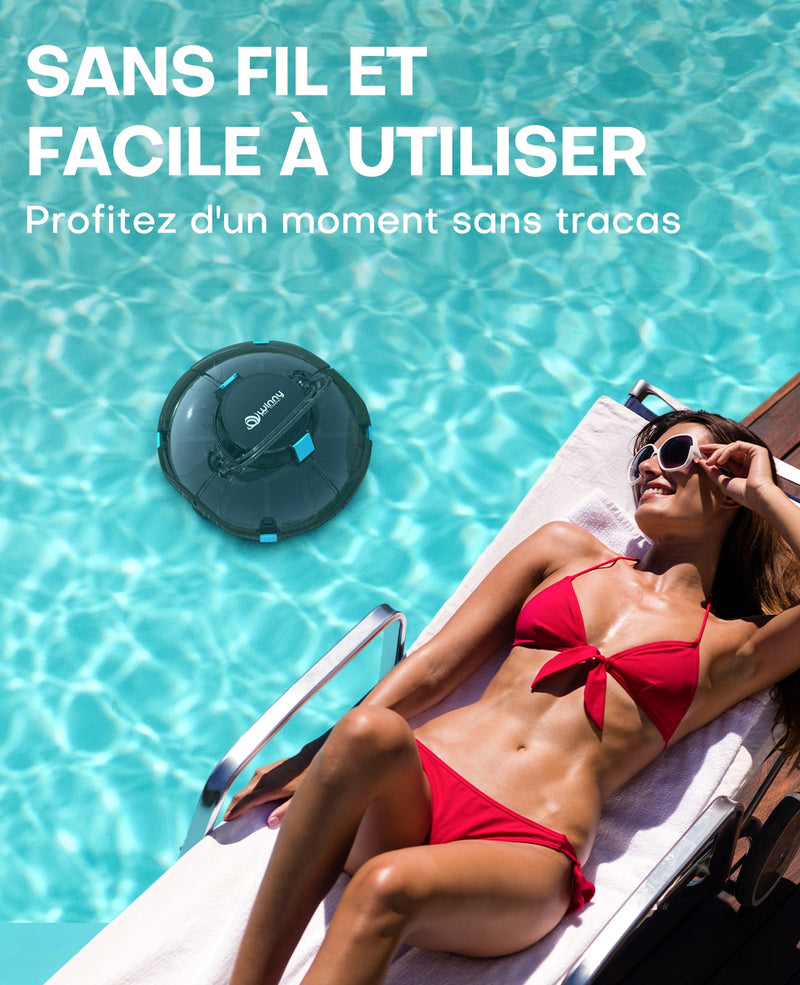
Robotic pool cleaners are self-contained machines designed to scrub, vacuum, and filter pool surfaces independently. They operate using onboard motors, pumps, and filtration systems rather than relying on the pool’s circulation equipment.
Modern robotic cleaners use intelligent navigation technologies, including gyroscopic sensors, mapping algorithms, and obstacle detection. These systems allow the robot to systematically cover the pool floor, walls, and sometimes the waterline.
Most units feature rotating brushes that loosen dirt, algae, and biofilm while powerful suction removes debris. Internal filter cartridges capture both large debris such as leaves and fine particles like sand and pollen.
Cordless models powered by rechargeable batteries have become increasingly popular because they eliminate cable tangling and simplify deployment. Corded models, meanwhile, provide continuous operation for extended cleaning sessions.
The key benefit is automation. Once placed in the water, the robot performs the entire cleaning cycle with little or no supervision.

Time Efficiency: Automation vs Hands-On Labor
Time savings is one of the most significant differences between the two methods.
Manual cleaning requires direct involvement throughout the process. Even experienced pool owners must spend considerable time vacuuming, brushing, and emptying baskets. For busy households, this can consume valuable weekends or evenings.
Robotic cleaners dramatically reduce hands-on time. Setup typically takes less than a minute, and retrieval only a few minutes more. While the machine operates for one to three hours depending on the model, the homeowner is free to focus on other tasks.
Over a full swimming season, the cumulative time savings can be substantial. What would otherwise amount to dozens of hours of manual labor is reduced to occasional maintenance of the robot itself.
From a purely time-efficiency standpoint, robotic pool cleaners are clearly superior.
Cleaning Performance and Consistency
Efficiency also depends on how thoroughly and consistently the pool is cleaned.
Manual cleaning quality varies depending on the person performing the task. Fatigue, inexperience, or rushed work can leave debris behind. Reaching deep ends or large pools can be physically challenging, leading to uneven results.
Robotic cleaners deliver consistent performance because they follow programmed cleaning patterns. Advanced models ensure full coverage of the pool floor and walls, minimizing missed spots. Active brushes provide continuous scrubbing that is often more effective than manual brushing.
Additionally, robots can clean more frequently. Daily or every-other-day cycles are feasible because they require minimal effort, helping maintain consistently clear water.
Manual cleaning may achieve excellent results when performed carefully, but robotic cleaners excel in maintaining high standards over time.
Energy Efficiency and Equipment Impact
Traditional suction cleaning relies on the pool’s pump, which is one of the most energy-intensive components of a pool system. Running the pump for extended periods increases electricity costs and mechanical wear.
Robotic cleaners use low-voltage power supplies or energy-efficient batteries. Because they operate independently, they reduce the workload on the main filtration system. This can extend the lifespan of pumps and filters while lowering energy consumption.
Furthermore, robotic cleaners filter debris internally before returning water to the pool, improving circulation efficiency and reducing strain on existing equipment.
Over the long term, robotic cleaning is typically more energy efficient and less taxing on pool infrastructure.
Cost Analysis: Upfront Investment vs Long-Term Savings
Manual cleaning tools are inexpensive compared to robotic cleaners. A basic vacuum head, pole, and hose cost only a fraction of an automated device, making manual cleaning attractive for budget-conscious owners.
However, long-term costs tell a different story. Manual cleaning increases energy usage, accelerates wear on pumps and filters, and requires more frequent chemical adjustments due to inconsistent maintenance.
Robotic cleaners involve a higher upfront purchase price but can reduce operating expenses over time. Lower energy consumption, reduced equipment strain, and improved water quality contribute to overall savings.
For homeowners planning to maintain a pool for many years, the long-term financial efficiency often favors robotic cleaners.
Water Quality and Health Benefits
Clean water is not just about appearance. Proper maintenance prevents algae growth, bacterial buildup, and cloudy conditions that can affect swimmer health.
Robotic cleaners remove fine particles that manual vacuums may miss, particularly when using high-efficiency filters. Continuous brushing disrupts biofilm formation, which helps chlorine work more effectively.
Because robots encourage frequent cleaning, they support stable chemical balance and clearer water. Manual cleaning, when performed irregularly, can allow contaminants to accumulate between sessions.
From a health and water-quality perspective, robotic cleaning offers a more reliable solution.
Situations Where Manual Cleaning Still Makes Sense
Despite the advantages of robotic cleaners, manual cleaning retains value in certain scenarios.
Spot cleaning is one example. After storms, parties, or heavy leaf fall, quickly removing large debris with a net or manual vacuum may be faster than running a full robotic cycle.
Pools with unusual shapes, tight corners, or obstacles may occasionally require manual intervention. Additionally, robotic cleaners do not typically clean steps, ladders, or attached spas thoroughly.
Many pool professionals recommend a hybrid approach: routine maintenance performed by a robot, supplemented by occasional manual touch-ups.
Which Method Is More Efficient?
When evaluating overall efficiency across time, performance, energy use, long-term cost, and water quality, robotic pool cleaners clearly outperform manual cleaning for most residential pools.
Manual cleaning remains useful for targeted tasks and emergency cleanup, but relying on it as the primary maintenance method demands significant time and effort while delivering less consistent results.
Robotic pool cleaners provide automated, reliable, and energy-efficient maintenance that keeps pools swim-ready with minimal involvement. For modern homeowners seeking convenience without sacrificing cleanliness, they represent the most efficient solution available in 2026.
Ultimately, the best strategy for many pool owners is combining both methods: using a robotic cleaner for routine maintenance and manual tools for occasional precision cleaning. This balanced approach ensures optimal efficiency, pristine water conditions, and maximum enjoyment of the pool throughout the swimming season.


