

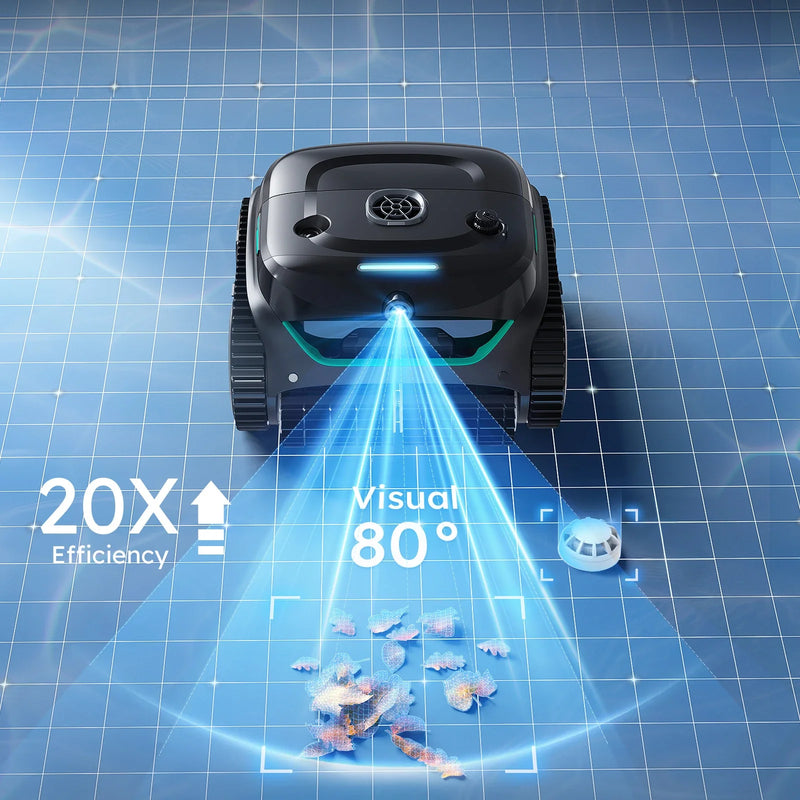
Maintaining a spotless swimming pool depends heavily on one critical factor: suction power. While modern cordless pool vacuums boast advanced navigation, long battery life, and convenient designs, their true effectiveness ultimately comes down to how efficiently they remove debris from the pool floor and walls. As homeowners increasingly shift toward cordless solutions for convenience and safety, comparing suction performance among leading brands has become essential.
This comprehensive guide examines how suction power is measured, what performance indicators truly matter, and how top cordless pool vacuum brands compare in real-world cleaning scenarios—with a particular focus on Wybot, a brand gaining strong recognition for delivering powerful yet efficient cleaning technology.
Why Suction Power Is the Core of Pool Cleaning Performance
Suction power determines whether a vacuum merely moves debris around or completely removes it from the water. Pools accumulate a wide spectrum of contaminants, from large leaves and twigs to fine sand, pollen, algae particles, and organic sediment. Weak suction may handle floating debris but often fails to lift dense material settled on the floor.
Effective suction must overcome water resistance, particle weight, and surface adhesion. For example, wet leaves can stick firmly to vinyl liners, while fine silt may form a compact layer that requires strong upward force to dislodge. Without sufficient power, debris remains behind, leading to cloudy water and increased chemical demand.
High suction also improves cleaning efficiency. A vacuum that captures debris in one pass reduces operating time, conserves battery energy, and minimizes wear on internal components.
How Suction Power Is Measured in Cordless Pool Vacuums
Unlike household vacuums, pool cleaners operate underwater, making performance measurement more complex. Manufacturers typically evaluate suction using a combination of engineering metrics and real-world testing.
One key indicator is flow rate, often measured in gallons or liters per minute. Higher flow rates generally correspond to stronger debris intake capability. Another factor is motor wattage, which influences how much energy is available to generate suction, though efficiency varies by design.
Impeller design plays a crucial role as well. Optimized blades can move large volumes of water while maintaining pressure, producing strong suction without excessive battery consumption. Seal integrity and intake geometry further affect performance by preventing energy loss.
Independent testing often includes debris pickup trials using standardized materials such as sand, leaves, and fine dust. These tests reveal how well a vacuum performs across different contamination scenarios rather than relying solely on technical specifications.
The Advantages of Cordless Technology in Power Delivery
Cordless pool vacuums once faced skepticism regarding power output compared to corded models. However, advances in lithium-ion battery technology have significantly narrowed—and in some cases eliminated—the gap.
Modern high-capacity batteries deliver stable voltage throughout the cleaning cycle, enabling consistent suction from start to finish. Intelligent power management systems adjust motor output based on resistance, maximizing efficiency without sacrificing performance.
Cordless designs also eliminate pressure losses associated with long hoses or external pumps. Because suction is generated directly within the device, energy transfer is more efficient, resulting in surprisingly strong cleaning capability despite compact size.
Wybot: Engineering High Suction with Energy Efficiency
Among emerging leaders in cordless pool cleaning technology, Wybot has distinguished itself through a balanced approach to power and efficiency. Rather than focusing solely on raw motor output, Wybot engineers optimize the entire fluid dynamics system—from intake ports to filtration chambers—to maximize debris capture.
Wybot cordless models typically feature high-performance brushless motors paired with precision impellers. This combination produces robust suction capable of lifting both heavy debris and fine sediment while maintaining low energy consumption.
Another advantage is adaptive cleaning technology. Some Wybot units automatically adjust suction intensity based on detected conditions, increasing power for heavily soiled areas and conserving battery in cleaner zones. This smart allocation extends runtime without compromising cleaning quality.
Real-world user feedback frequently highlights Wybot’s ability to pick up stubborn dirt in a single pass, particularly on flat pool floors where fine debris tends to accumulate.

Performance Against Fine Debris and Sand
Fine particles are among the most challenging contaminants to remove because they easily disperse when disturbed. Effective cleaning requires a delicate balance between agitation and capture.
Wybot vacuums employ carefully designed brush systems that loosen sediment without scattering it. Strong intake flow then pulls particles into multi-layer filtration compartments before they can resettle.
Independent comparisons often show that high-efficiency cordless models, including Wybot, outperform older suction-side cleaners that rely on pool pumps. By capturing debris internally, these devices prevent recirculation and reduce strain on the filtration system.
For pools located in dusty or sandy environments, this capability is especially valuable.
Handling Large Debris Without Clogging
While fine debris tests precision, large debris tests durability and intake capacity. Leaves, acorns, and small twigs can obstruct weaker vacuums, forcing manual intervention.
Wybot designs typically incorporate wide suction ports and high-capacity debris chambers to accommodate bulkier material. Internal flow channels are engineered to minimize clogging, allowing continuous operation even in heavily contaminated pools.
Efficient debris handling not only improves cleaning results but also protects internal components from overload conditions.
Wall Climbing and Vertical Suction Performance
True suction strength is evident when a vacuum attempts to clean vertical surfaces. Climbing pool walls requires sufficient traction, balanced buoyancy, and powerful intake to maintain contact.
Many premium cordless models—including select Wybot units—feature wall-climbing capability supported by enhanced motor torque and optimized weight distribution. Strong suction helps anchor the device to surfaces while removing algae and dirt from waterlines.
This feature is particularly valuable because manual wall cleaning is labor-intensive and often neglected.
Battery Life Versus Power Trade-Off
High suction inevitably consumes more energy, making battery efficiency a crucial consideration. Advanced cordless vacuums manage this trade-off through intelligent control systems and energy-dense battery cells.
Wybot products often emphasize extended runtime without sacrificing cleaning strength. By combining efficient motors with smart navigation that avoids redundant coverage, these devices maximize productivity per charge.
For medium to large residential pools, sustained performance is essential to complete cleaning cycles without interruption.
Real-World Reliability and User Experience
Technical specifications alone cannot capture the full picture of performance. Reliability, ease of maintenance, and consistent results over time are equally important.
Wybot has built a reputation for user-friendly operation, quick filter access, and durable construction. Self-contained filtration reduces dependency on pool systems, while cordless operation simplifies deployment.
Positive user experiences frequently cite reduced cleaning time and clearer water after switching from traditional methods.
Choosing the Right Cordless Vacuum Based on Suction Needs
Not all pools require maximum power. Small pools with light debris may function well with compact models, while larger pools surrounded by trees demand stronger suction and higher capacity.
When evaluating options, buyers should consider debris type, pool size, surface material, and desired level of automation. Prioritizing suction performance ensures effective cleaning regardless of conditions.
Wybot’s range of models allows consumers to select appropriate power levels without overpaying for unnecessary features.
Suction power remains the defining factor in cordless pool vacuum performance. Advances in battery technology, motor efficiency, and fluid dynamics have enabled modern devices to deliver powerful cleaning without cords or complex installation.
Among leading brands, Wybot stands out for combining strong suction, intelligent energy management, and practical design. Its ability to handle both fine sediment and large debris makes it a compelling choice for homeowners seeking reliable, low-effort pool maintenance.
By understanding how suction is measured and what performance characteristics truly matter, pool owners can make informed decisions and enjoy consistently clean, inviting water throughout the swimming season.


