

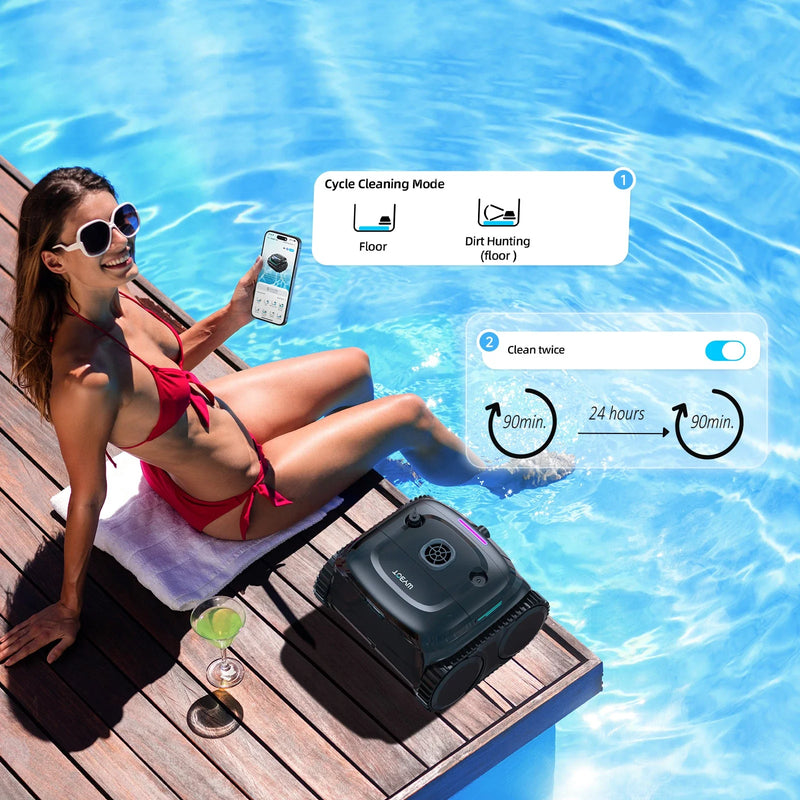
Pool ownership has always come with a trade-off: relaxation and enjoyment on one side, maintenance and effort on the other. For years, pool owners accepted that keeping water clean meant dealing with hoses, cords, manual vacuuming, and hours of routine upkeep. But in 2026, that expectation is rapidly changing.
Cordless pool cleaner robots are no longer a niche upgrade—they are quickly becoming the new standard. From suburban backyards to vacation homes, more people are replacing traditional cleaning methods with these smart, self-contained devices. The question is no longer if you should switch, but why so many people already have.
This article explores the real reasons behind the shift, backed by practical insights, user experience trends, and the technological improvements that define this new generation of pool care.
The End of Tangled Cords and Complicated Setups
One of the biggest frustrations with older pool cleaning systems has always been the setup. Long hoses, power cords, and complicated connections to pumps or skimmers made cleaning feel like a project rather than a simple task.
Cordless pool cleaner robots eliminate this entirely. There’s no external wiring, no suction hookup, and no need to adjust pool plumbing. You charge the unit, place it in the water, and press start.
This simplicity is a major reason why adoption has surged in 2026. People are choosing solutions that reduce friction in everyday tasks. When cleaning your pool becomes as easy as pressing a button, it’s hard to justify older, more cumbersome systems.
Smarter Navigation Means Better Results
Early robotic pool cleaners often relied on random movement, which could lead to missed spots and inefficient cleaning cycles. Today’s cordless robots are far more intelligent.
Many models now feature advanced navigation systems that map the pool and follow optimized cleaning paths. This ensures thorough coverage with minimal overlap, saving both time and battery power.
In practical terms, this means fewer cleaning cycles, more consistent results, and less need for manual touch-ups. Pool owners are seeing cleaner water with less effort, which naturally drives adoption.
Designed for Real Life, Not Just Performance Specs
What sets 2026 models apart isn’t just better technology—it’s better usability. Manufacturers have focused heavily on real-life scenarios rather than just technical performance.
For example, modern cordless pool robots often include:
- One-touch operation
- Lightweight designs for easy handling
- Quick-access filter baskets
- Automatic parking near the pool edge when the battery is low
These features may seem small individually, but together they transform the user experience. The device fits into your routine instead of disrupting it.
This shift toward user-centered design is a key reason why more homeowners are making the switch.

Time Savings That Actually Add Up
Time is one of the most valuable resources people have, and pool maintenance can quietly consume a lot of it.
Manual cleaning can take 30 minutes to an hour per session, and even traditional automatic systems require setup, monitoring, and adjustments. Over the course of a season, that adds up to dozens of hours.
Cordless pool cleaner robots dramatically reduce this time investment. You can start a cleaning cycle in seconds and let it run while you focus on other activities.
In 2026, where convenience is a priority across all aspects of life, this kind of time-saving solution is exactly what consumers are looking for.
Improved Battery Technology Changes Everything
A few years ago, battery life was one of the main concerns with cordless devices. Limited runtime and long charging times made some users hesitant to switch.
That’s no longer the case. Advances in lithium-ion battery technology have significantly improved both runtime and charging efficiency.
Most modern cordless pool robots now offer 90 to 150 minutes of operation on a single charge, which is enough for the majority of residential pools. Charging times have also been reduced, making it easier to run multiple cycles if needed.
This improvement has removed one of the biggest barriers to adoption, accelerating the shift toward cordless solutions.
Better for Different Pool Types
Another reason for the growing popularity of cordless pool cleaner robots is their versatility. They are now designed to handle a wide range of pool types and conditions.
Whether you have an above-ground pool, a small backyard inground pool, or a medium-sized family pool, there are models tailored to your needs.
Some advanced units can even climb walls, clean slopes, and handle different surface materials. This flexibility makes them appealing to a broader audience than ever before.
Reduced Dependence on Pool Systems
Traditional pool cleaners often rely on your pool’s existing pump and filtration system. This can increase wear and tear on those components and limit how effectively the cleaner operates.
Cordless robotic cleaners are independent systems. They have their own motors, filters, and power sources, which reduces the load on your pool equipment.
This not only improves cleaning efficiency but can also help extend the lifespan of your pool’s infrastructure. For many homeowners, this added benefit makes the switch even more worthwhile.
Lower Long-Term Maintenance Effort
Another overlooked advantage is the reduction in overall maintenance effort. With fewer hoses, connections, and mechanical dependencies, cordless robots are generally easier to maintain.
Cleaning the device usually involves rinsing a filter basket, which takes only a few minutes. There are fewer parts to replace and fewer issues related to tangling or clogging.
Over time, this simplicity translates into less frustration and more consistent performance.
The Role of Brands Like Wybot
As the market grows, certain brands have played a key role in making cordless pool cleaning more accessible. Wybot, for example, has gained recognition for offering models that balance performance, affordability, and ease of use.
Devices like the Wybot C1 and A1 have helped introduce many users to cordless cleaning without the high price tag of premium models. Their focus on practical features—such as efficient navigation, solid battery life, and user-friendly design—aligns well with what modern consumers expect.
While there are many options available, brands that prioritize real-world usability are leading the shift in 2026.
A Lifestyle Upgrade, Not Just a Tool
What’s driving the widespread adoption of cordless pool cleaner robots isn’t just technology—it’s the lifestyle improvement they offer.
Pool owners no longer want to spend their weekends cleaning. They want solutions that let them enjoy their pool with minimal effort.
A cordless robot turns pool maintenance into a background task. You start it, walk away, and come back to a clean pool. That change in experience is what makes these devices feel less like tools and more like upgrades to everyday life.
Are There Any Downsides?
Despite their many advantages, cordless pool cleaner robots are not perfect.
Battery limitations can still be a factor for very large pools. Some entry-level models may not offer advanced navigation or wall-climbing capabilities. And like any device, performance can vary depending on build quality.
However, for the majority of residential users, these limitations are relatively minor compared to the overall benefits.

In 2026, the shift toward cordless pool cleaner robots is driven by a combination of convenience, efficiency, and improved technology. They simplify setup, reduce manual effort, and deliver consistent cleaning results—all while fitting seamlessly into modern lifestyles.
As battery technology continues to improve and designs become even more user-focused, it’s clear that cordless solutions are not just a trend—they are the future of pool maintenance.
For anyone still relying on traditional cleaning methods, the growing number of users making the switch sends a clear message: there’s now a better, easier way to keep your pool clean.


