

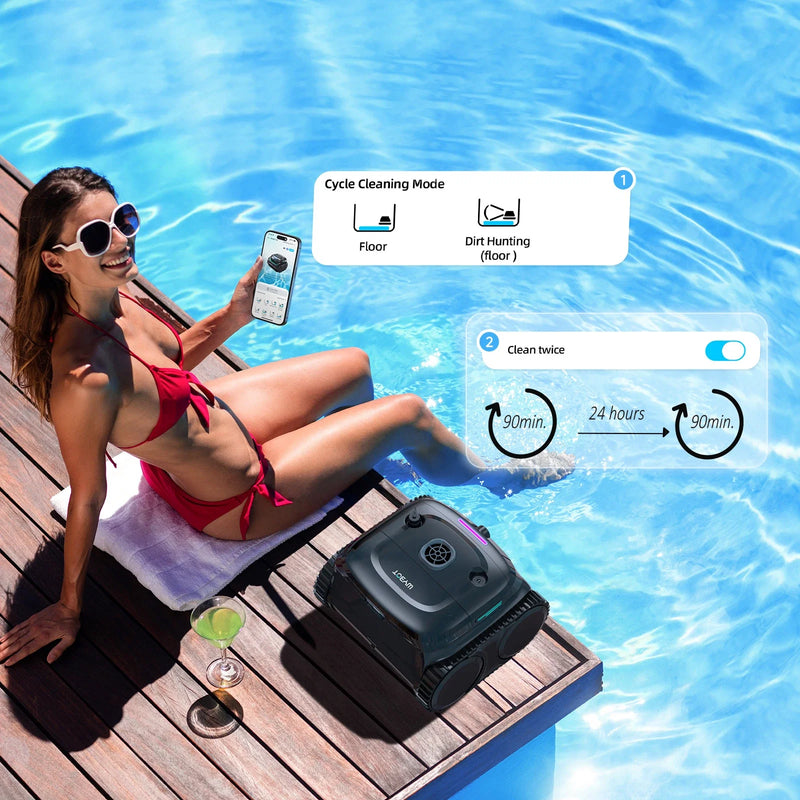
Swimming pool maintenance has become much easier thanks to modern robotic pool cleaners. Homeowners no longer need to spend hours manually vacuuming debris, brushing pool walls, or balancing cleaning schedules around busy lifestyles. Among the most popular options today are corded and cordless pool cleaners. While both are designed to automate pool cleaning, they differ significantly in performance, convenience, runtime, maintenance, and overall user experience.
Choosing between a corded and cordless pool cleaner depends on several factors, including pool size, cleaning frequency, budget, and personal preferences. Understanding the strengths and limitations of each type can help pool owners invest in the right solution for long-term efficiency and satisfaction.
This guide explores the key differences between corded and cordless pool cleaners while highlighting how modern brands like WYBOT continue improving pool cleaning technology for residential pool owners.
Understanding How Corded Pool Cleaners Work
Corded robotic pool cleaners connect directly to an electrical power source through a floating cable. These units continuously receive power during operation, allowing them to clean pools for extended periods without battery limitations.
Most corded pool cleaners include advanced navigation systems, powerful suction motors, and multi-layer filtration systems. Because they receive consistent power, they often deliver strong and stable cleaning performance throughout the entire cleaning cycle.
Corded cleaners are especially popular for large inground pools because they can operate for several hours without interruption. Many premium models are capable of climbing walls, cleaning waterlines, and handling heavy debris such as leaves, sand, and algae.
One advantage of corded systems is reliability. Since they are not dependent on battery capacity, users do not need to worry about reduced runtime over time. This makes them suitable for homeowners who require deep cleaning sessions on a regular basis.
However, the floating cable can sometimes become tangled during operation, especially in pools with irregular shapes or obstacles. Storage and setup may also require slightly more effort compared to cordless models.
Understanding How Cordless Pool Cleaners Work
Cordless robotic pool cleaners use rechargeable batteries instead of direct electrical connections. These cleaners move freely inside the pool without being attached to a power cable, offering greater mobility and convenience.
In recent years, battery technology has improved dramatically, allowing cordless pool cleaners to provide longer runtimes and stronger suction power. Brands such as WYBOT have introduced advanced cordless models that combine intelligent navigation with efficient battery management systems.
Cordless cleaners are particularly attractive for above-ground pools and medium-sized residential pools. They eliminate cable tangling issues and make setup extremely simple. Users only need to charge the cleaner, place it in the water, and allow it to operate automatically.
Another major convenience factor is portability. Cordless units are generally lightweight and easier to transport or store. This makes them ideal for homeowners who prioritize simplicity and quick maintenance routines.
The main limitation of cordless pool cleaners is battery runtime. Depending on the model, cleaning sessions may range from 60 minutes to over 3 hours. Larger pools may require multiple charging cycles for complete cleaning coverage.
Battery lifespan is another consideration. Over several years of use, rechargeable batteries may gradually lose capacity, potentially affecting cleaning duration.
Cleaning Performance Comparison
When comparing cleaning performance, both corded and cordless pool cleaners can deliver excellent results, but there are important differences in consistency, power, and cleaning coverage.
Corded pool cleaners generally provide stronger continuous suction because they receive uninterrupted electrical power. This makes them highly effective for removing heavy debris, cleaning large pools, and performing deep cleaning tasks.
Many high-end corded models also feature sophisticated mapping technology, allowing systematic cleaning patterns that improve efficiency. They are often preferred for pools surrounded by trees or environments where debris accumulation is significant.
Cordless cleaners, on the other hand, have improved considerably in recent years. Premium cordless models now include dual-drive motors, smart route planning, and advanced filtration systems that rival many corded units.
For everyday residential maintenance, cordless cleaners are often more than capable of handling dirt, leaves, bugs, and fine particles. Some advanced WYBOT cordless models even provide wall climbing and waterline cleaning functions similar to traditional corded robots.
The difference becomes more noticeable in very large pools or during intensive cleaning situations where extended runtime is required.

Convenience and Ease of Use
Convenience is one of the biggest reasons many homeowners choose cordless pool cleaners.
Without cables, setup is faster and simpler. Users can place the cleaner directly into the pool without connecting power cords or managing floating cables. After cleaning, many cordless models automatically park near the pool edge for easy retrieval.
Cordless cleaners also reduce storage complexity. Since there are no long cables to wrap or untangle, maintenance routines feel more streamlined and user-friendly.
For families with children or pets, cordless designs may also feel safer because there are no external electrical cords around the pool area during operation.
Corded pool cleaners still offer convenience in terms of uninterrupted operation. Users can run longer cleaning cycles without monitoring battery levels or waiting for recharging.
However, cable management remains one of the most common complaints among corded cleaner owners. Tangled cords can occasionally interrupt cleaning patterns or require manual adjustment.
In terms of day-to-day usability, cordless pool cleaners typically provide a more modern and effortless experience for average residential users.
Pool Size Compatibility
Pool size plays a major role when choosing between corded and cordless models.
Corded pool cleaners are often better suited for large inground pools because they can clean continuously for extended periods. Their powerful motors and unlimited runtime make them ideal for pools exceeding 50 feet in length.
Large pools with deep ends, complex shapes, or heavy debris loads often benefit from the stability and endurance of corded systems.
Cordless pool cleaners are excellent for small to medium-sized pools, including above-ground pools and compact inground pools. Many newer cordless models now support larger pools thanks to extended battery life and improved navigation systems.
For homeowners seeking simple weekly maintenance without extensive setup, cordless units provide exceptional convenience.
Before purchasing a cleaner, pool owners should always verify maximum coverage area, runtime specifications, and charging requirements.
Maintenance Requirements
Both types of pool cleaners require regular maintenance to ensure optimal performance.
Corded cleaners require occasional cable inspection to prevent wear or tangling issues. Users may also need to clean filters, brushes, and tracks regularly.
Cordless cleaners eliminate cable maintenance but introduce battery management responsibilities. Proper charging habits can help maximize battery lifespan and maintain consistent performance.
Most modern robotic cleaners feature top-load filter baskets that simplify debris removal. Rinsing filters after each cleaning cycle is recommended for both corded and cordless units.
WYBOT and other leading brands continue improving maintenance-friendly designs by offering quick-access filters, lightweight construction, and durable internal components.
Routine maintenance remains relatively minimal compared to traditional manual pool cleaning methods.
Energy Efficiency and Operating Costs
Cordless pool cleaners are often considered more energy efficient because they use rechargeable lithium batteries and consume relatively low power during charging.
Corded cleaners continuously draw electricity during operation, although modern robotic systems are still far more energy efficient than traditional pool vacuum systems connected to pool pumps.
Battery replacement costs may eventually become a factor for cordless cleaner owners after several years of use.
Corded models may involve slightly higher long-term electricity usage, but they avoid battery degradation concerns.
Overall operating costs for both systems remain relatively low compared to the time and labor savings they provide.
Which Pool Cleaner Is Better?
The answer depends largely on individual pool requirements and cleaning preferences.
Corded pool cleaners are ideal for:
- Large inground pools
- Heavy debris environments
- Long cleaning cycles
- Maximum suction performance
- Deep cleaning needs
Cordless pool cleaners are ideal for:
- Small to medium pools
- Quick and convenient operation
- Minimal setup effort
- Cable-free cleaning
- Easy storage and portability
Many modern pool owners increasingly prefer cordless technology because of its convenience and improving performance capabilities. Brands like WYBOT continue pushing innovation forward by developing cordless cleaners with smarter navigation, longer runtimes, and stronger suction systems.
For users prioritizing simplicity and daily convenience, cordless cleaners often provide the best overall experience. For maximum endurance and uninterrupted power, corded cleaners remain a strong choice.

Corded and cordless pool cleaners each offer unique advantages in performance and convenience. Corded models deliver consistent power and extended cleaning sessions, making them highly effective for large pools and demanding cleaning conditions. Cordless cleaners provide unmatched ease of use, portability, and cable-free convenience that fits modern lifestyles.
As robotic pool cleaning technology continues evolving, the performance gap between corded and cordless systems is becoming smaller. Advanced cordless models now offer powerful suction, intelligent navigation, and reliable cleaning coverage suitable for most residential pools.
By carefully evaluating pool size, cleaning needs, maintenance preferences, and budget, homeowners can confidently choose the robotic pool cleaner that best supports a cleaner, healthier, and more enjoyable swimming experience.


