

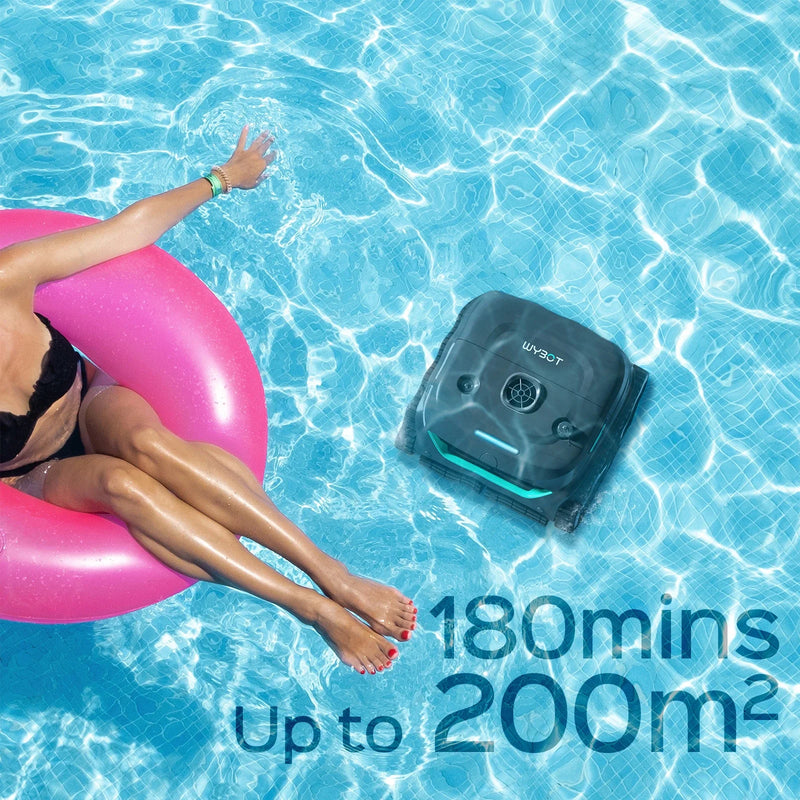
For many inground pool owners, keeping the pool clean can feel like a never-ending responsibility. Leaves, dirt, algae, and fine debris constantly find their way into the water, turning what should be a relaxing space into a maintenance task. Over the years, pool cleaning technology has evolved significantly, and cordless pool vacuums have become one of the most talked-about solutions.
But the key question remains: are cordless pool vacuums for inground pools actually easy to use, or is the convenience overstated? In this article, we’ll take a realistic, experience-driven look at how these devices perform in everyday situations, what makes them user-friendly, and where they may still have limitations.
What Is a Cordless Pool Vacuum?
A cordless pool vacuum is a battery-powered cleaning device designed to operate independently without the need for hoses, cables, or direct connection to a pool pump. Unlike traditional suction-side or pressure-side cleaners, cordless models are self-contained units.
You simply charge the device, place it in the pool, and let it clean. Most models are equipped with built-in motors, filters, and navigation systems, allowing them to collect debris and move across the pool floor with minimal user input.
This simplicity is the main reason why cordless pool vacuums are often marketed as “easy to use.” But ease of use depends on more than just removing cords—it involves the entire user experience.
Setup: As Simple As It Sounds?
One of the biggest advantages of cordless pool vacuums is the setup process. Traditional cleaners often require connecting hoses, adjusting valves, or ensuring compatibility with your pool’s filtration system. That setup alone can take 15–30 minutes, especially for beginners.
With a cordless model, the process is refreshingly simple. After charging the unit, you place it in the water and press a button. There’s no need to deal with hoses, suction ports, or external pumps.
In real-life use, this ease of setup makes a noticeable difference. It lowers the barrier to regular cleaning because there’s no “prep work” to delay you. Even if you only have a short window of time, you can start a cleaning cycle quickly.

Daily Operation: Truly Hands-Free?
In most cases, cordless pool vacuums are designed to operate with minimal supervision. Once activated, they move along the pool floor, collecting debris and filtering water.
For many pool owners, this hands-free operation is the biggest benefit. You can run the cleaner while doing other tasks—working, cooking, or relaxing—without needing to monitor it constantly.
However, it’s important to set realistic expectations. Not all models include advanced navigation systems. Some entry-level units use random movement patterns, which may require longer cleaning times or occasional repositioning.
Still, even with basic models, the effort required is significantly less than manual cleaning.
Handling and Retrieval: Easier Than You Think
A common concern is whether retrieving a cordless pool vacuum is difficult, especially for deeper inground pools. In practice, most modern designs address this issue effectively.
Many cordless vacuums are programmed to stop near the pool edge when the battery is low. This makes retrieval much easier, eliminating the need to reach into deep water.
Additionally, most units are designed to be lightweight when removed from the pool. While they may feel heavier underwater due to water resistance, lifting them out is usually manageable for most users.
This thoughtful design contributes to the overall ease of use, especially for homeowners who prefer low-effort solutions.
Cleaning Performance vs. Ease of Use
Ease of use isn’t just about convenience—it’s also about effectiveness. A device that’s simple to operate but doesn’t clean well will still create extra work.
Cordless pool vacuums generally perform well on pool floors, picking up leaves, dirt, sand, and small debris. Many models also feature fine filtration systems that improve water clarity.
However, wall climbing and waterline cleaning can vary between models. Entry-level units may focus primarily on floor cleaning, while more advanced options can handle walls and slopes.
If your inground pool has complex shapes or vertical surfaces, choosing a model with enhanced capabilities will improve both cleaning results and overall convenience.
Maintenance: Minimal but Necessary
Another factor that determines ease of use is how easy the device is to maintain. Fortunately, cordless pool vacuums are typically designed with user-friendly maintenance in mind.
Most models feature removable filter baskets or cartridges that can be rinsed with a garden hose. This process usually takes only a few minutes and doesn’t require any special tools.
There are no hoses to untangle, no pump connections to maintain, and fewer moving parts compared to traditional systems. This simplicity reduces the overall effort required to keep the device in good condition.
Battery Life and Charging Considerations
Battery performance plays a key role in usability. Most cordless pool vacuums offer runtimes between 60 and 120 minutes, depending on the model and conditions.
For small to medium-sized inground pools, this is usually sufficient for a full cleaning cycle. Larger pools may require multiple sessions, which means recharging the device.
Charging times typically range from 2 to 4 hours. While this is generally acceptable, it does require some planning if you need multiple cleaning cycles in a short period.
In terms of ease of use, battery limitations are one of the few trade-offs compared to corded systems.
Who Will Find It Easiest to Use?
Cordless pool vacuums are especially well-suited for certain types of users.
Busy homeowners who don’t have time for manual cleaning will appreciate the automation. First-time pool owners will benefit from the simple setup and operation. Families who use their pool frequently will enjoy the ability to maintain cleanliness with minimal effort.
On the other hand, users with very large or heavily used pools may need to manage expectations. While cordless models are convenient, they may not fully replace high-end built-in cleaning systems in every scenario.
Real-Life Example: A Typical Cleaning Routine
Imagine coming home after work on a warm day. Instead of spending 30–45 minutes cleaning your pool, you simply place your cordless vacuum in the water and press start.
While you prepare dinner or relax, the device quietly cleans the pool floor. By the time you’re ready for a swim, the water is clear, and the debris is gone.
Afterward, you remove the vacuum, rinse the filter, and set it to charge. The entire process requires only a few minutes of your time.
This kind of routine is where cordless pool vacuums truly shine—they reduce effort without adding complexity.
Are There Any Downsides?
While cordless pool vacuums are generally easy to use, they are not without limitations.
Battery life can restrict cleaning time for larger pools. Some models may not clean walls or tight corners effectively. Lower-end units may require occasional manual intervention to achieve complete coverage.
These limitations don’t necessarily make the devices difficult to use, but they are worth considering when choosing the right model.
If your goal is to spend less time cleaning and more time enjoying your pool, a cordless pool vacuum is a smart and practical investment.


