

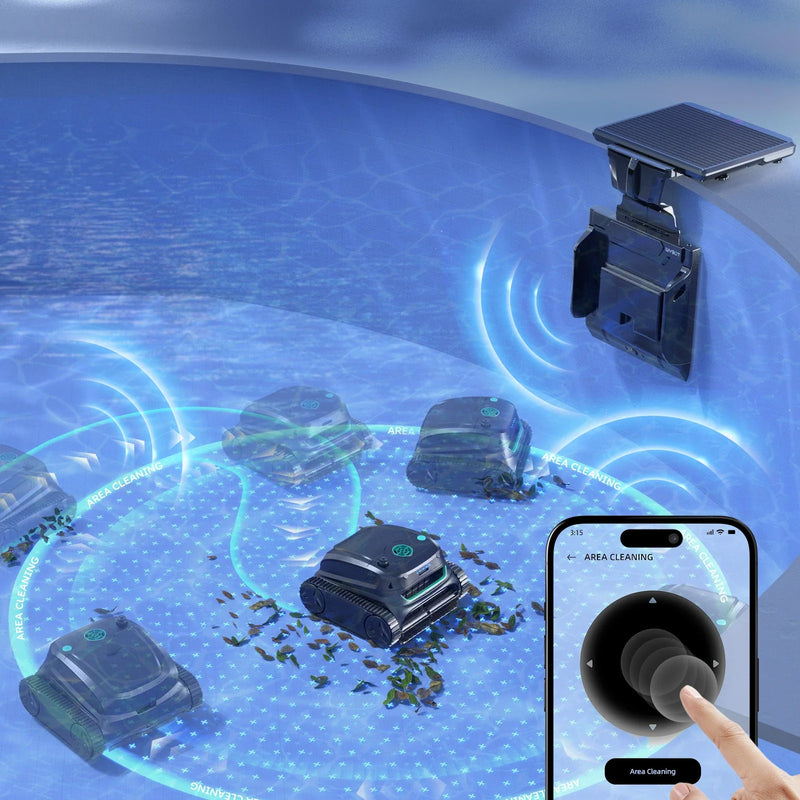
Over the past decade, pool maintenance has undergone a quiet but powerful transformation. Traditional cleaning systems often relied on hoses, external pumps, and complex setup processes that limited flexibility and convenience. The emergence of battery-powered automatic pool vacuum technology has changed this experience entirely, introducing a new era defined by mobility, simplicity, and intelligent automation.
Cordless pool vacuums are designed to operate independently, without being tethered to a power outlet or filtration system. This independence allows users to clean pools with far greater ease, especially in residential environments where convenience is a priority. As battery technology has improved, so has the performance of these devices, making them a reliable solution for everyday pool maintenance.
How Battery-Powered Pool Vacuums Work
At the core of cordless pool vacuum systems is a rechargeable lithium-ion battery combined with intelligent navigation and suction technology. Once activated, the device moves autonomously through the pool, collecting debris such as leaves, sand, and small particles.
Most models use internal motors to generate suction while brushes loosen dirt from surfaces. Advanced versions incorporate sensors that map pool dimensions and optimize cleaning paths. This reduces unnecessary movement and ensures more efficient coverage of floors, walls, and sometimes even waterlines.
The absence of cords eliminates tangling issues and allows the vacuum to move freely across different pool shapes and depths. This makes the system especially useful for irregular or custom-designed pools.
The Role of Battery Innovation in Performance
Battery technology is one of the most important factors driving the rise of cordless pool cleaning systems. Modern lithium-ion batteries offer higher energy density, longer runtime, and faster charging cycles compared to earlier generations of rechargeable power sources.
A typical full charge can support a full cleaning cycle, depending on pool size and debris load. Some advanced systems even include smart battery management features that optimize energy consumption based on cleaning conditions.
As battery efficiency continues to improve, manufacturers are able to design lighter devices without sacrificing performance. This balance between power and portability has made cordless pool vacuums increasingly appealing to homeowners seeking practical maintenance solutions.
Smart Features and Automation in Modern Pool Cleaning
Automation has become a defining characteristic of modern pool vacuum technology. Many cordless systems now integrate intelligent navigation algorithms that allow the device to adapt to pool shape and surface complexity.
Some units can detect obstacles and adjust their cleaning path in real time, while others follow pre-programmed routes for maximum efficiency. These features reduce the need for manual supervision and ensure more consistent cleaning results.
In addition, some systems offer app-based controls, allowing users to start, stop, or schedule cleaning sessions remotely. This integration of smart technology aligns with broader trends in home automation, where convenience and control are central to product design.
Real-World Benefits for Homeowners
For pool owners, the benefits of cordless vacuum technology extend beyond convenience. One of the most significant advantages is time savings. Without the need for manual setup or hose connections, cleaning can begin almost instantly.
Energy efficiency is another important factor. Battery-powered systems often consume less energy compared to traditional pump-based cleaners. This contributes to lower operational costs over time while maintaining strong cleaning performance.
Maintenance simplicity also plays a key role. With fewer external components, there is less risk of wear and tear. Most cordless vacuums require only basic cleaning of filters and occasional battery care, making them accessible even to users with limited technical experience.

Design Evolution and Engineering Improvements
The design of cordless pool vacuums has evolved significantly in recent years. Early models focused primarily on basic suction capabilities, while modern versions emphasize efficiency, durability, and user experience.
Manufacturers now use lightweight yet durable materials that resist corrosion from chlorine and saltwater exposure. Improved sealing technologies protect internal electronics from water intrusion, extending product lifespan.
Engineering advancements have also allowed for more compact designs without compromising cleaning power. This makes storage easier and improves portability, especially for smaller households or seasonal pool users.
Environmental and Efficiency Considerations
Battery-powered pool vacuums also contribute to more sustainable pool maintenance practices. By reducing reliance on continuous water pump circulation systems, they can help lower overall energy consumption.
Additionally, improved filtration systems within these devices capture fine particles that might otherwise circulate back into the pool environment. This leads to clearer water quality and reduces the need for chemical treatments.
As sustainability becomes an increasingly important consideration for consumers, energy-efficient cleaning solutions are expected to play a larger role in residential pool care.
User Experience and Practical Application
From a user perspective, cordless pool vacuums are designed with simplicity in mind. Setup typically involves charging the device, placing it in the water, and selecting a cleaning mode.
Once activated, the system operates independently until the cycle is complete. Many models automatically return to a designated area or float to the surface when cleaning is finished, making retrieval easy.
This hands-off approach is particularly valuable for busy homeowners who want to maintain clean pool conditions without dedicating significant time or effort.
The Future of Cordless Pool Cleaning Technology
The future of battery-powered pool vacuum systems is closely tied to advancements in robotics, artificial intelligence, and energy storage. As these technologies continue to evolve, we can expect even greater levels of autonomy and efficiency.
Future systems may feature enhanced mapping capabilities, allowing them to learn pool layouts over time and further optimize cleaning routes. Integration with smart home ecosystems is also likely to expand, enabling seamless control through voice assistants and connected devices.
Battery improvements will continue to extend runtime and reduce charging times, making cordless systems even more practical for larger pools and more demanding cleaning schedules.

Cordless battery-powered pool vacuum technology represents a significant step forward in modern pool maintenance. By combining mobility, automation, and energy efficiency, these systems offer a streamlined solution for keeping pools clean with minimal effort.
As innovation continues, this technology is expected to become even more intelligent, efficient, and widely adopted. For homeowners seeking convenience and performance, cordless pool cleaning systems provide a clear vision of the future of pool care.


