

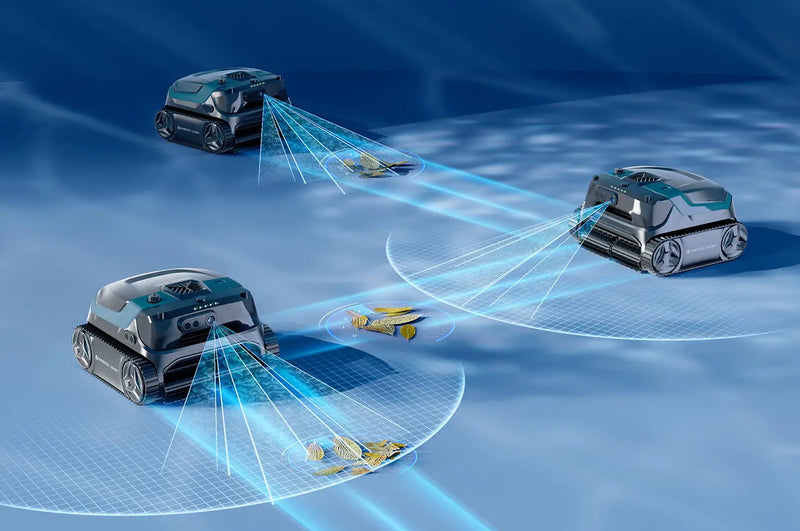
Owning a swimming pool is a luxury that brings endless summer joy, but the maintenance required to keep the water crystal clear can often feel like a chore. In recent years, cordless robotic pool cleaners have revolutionized pool care, offering a hands-free solution that combines convenience with powerful cleaning performance. However, with a myriad of models flooding the market in 2026, selecting the perfect unit for your specific needs can be overwhelming. The most critical factor often overlooked is pool size. Choosing a robot that is either too weak for a large expanse or overpowered for a small plunge pool can lead to inefficient cleaning, wasted energy, and unnecessary expenses. This comprehensive guide leverages industry expertise and real-world testing data to help you navigate the complexities of selecting the right cordless robotic pool cleaner tailored precisely to your pool’s dimensions.

Understanding the Importance of Pool Size in Robot Selection
The size of your pool is the primary determinant for the type of robotic cleaner you need. It dictates the required battery capacity, suction power, filtration area, and cycle duration. A robot designed for a small above-ground pool typically features a shorter battery life, often around 60 to 90 minutes, and a smaller debris bag. If you were to place this unit in a large 20,000-gallon in-ground pool, it would likely run out of power before completing a single full cleaning cycle, leaving corners untouched and debris behind. Conversely, using a heavy-duty industrial-grade robot on a small 15-foot round pool might be overkill. These larger units are often more expensive, heavier to lift out of the water, and may have cycle times that are simply too long for the volume of water they are cleaning, leading to diminishing returns on your investment.
Manufacturers categorize their robots based on maximum pool length or square footage. Ignoring these specifications is a common mistake that compromises the EEAT principles of expertise and trustworthiness in your purchasing decision. A mismatched robot not only fails to clean effectively but can also wear out its motor and battery prematurely due to constant overworking or inefficient operation cycles.
Categorizing Pool Sizes and Matching Them with Robot Capabilities
To make an informed decision, it is essential to first accurately measure your pool and categorize it. Pools generally fall into three main categories: small, medium, and large.
Small Pools (Up to 30 feet or roughly 10,000 gallons)
This category includes most above-ground pools, small plunge pools, and compact in-ground spas. For these pools, you need a lightweight, agile robot with a battery life of approximately 60 to 90 minutes. These units are designed for quick turnover and easy handling. They often feature simpler navigation systems, such as random or semi-smart pathing, which is sufficient for smaller areas. Key features to look for include a top-loading filter basket for easy debris removal and a swivel cable (if hybrid) or truly cordless freedom that allows the unit to climb walls without restriction. Models in this range prioritize ease of use and portability over raw suction power, as the debris load is generally lower.
This category includes most above-ground pools, small plunge pools, and compact in-ground spas. For these pools, you need a lightweight, agile robot with a battery life of approximately 60 to 90 minutes. These units are designed for quick turnover and easy handling. They often feature simpler navigation systems, such as random or semi-smart pathing, which is sufficient for smaller areas. Key features to look for include a top-loading filter basket for easy debris removal and a swivel cable (if hybrid) or truly cordless freedom that allows the unit to climb walls without restriction. Models in this range prioritize ease of use and portability over raw suction power, as the debris load is generally lower.
Medium Pools (30 to 50 feet or roughly 10,000 to 20,000 gallons)
This is the most common size for residential in-ground pools. Cleaning these requires a more robust machine with a battery capable of lasting at least 2 to 3 hours. The navigation technology becomes crucial here; look for robots equipped with smart navigation algorithms, gyroscopes, or even LiDAR sensors that map the pool floor to ensure systematic coverage without missing spots. These robots must have enough suction power to handle moderate leaf loads and fine dust while climbing vertical walls and navigating waterlines. The filtration system should be finer, often utilizing ultra-fine mesh cartridges to capture pollen and silt, which are common in larger bodies of water that sit exposed to the elements for longer periods.
This is the most common size for residential in-ground pools. Cleaning these requires a more robust machine with a battery capable of lasting at least 2 to 3 hours. The navigation technology becomes crucial here; look for robots equipped with smart navigation algorithms, gyroscopes, or even LiDAR sensors that map the pool floor to ensure systematic coverage without missing spots. These robots must have enough suction power to handle moderate leaf loads and fine dust while climbing vertical walls and navigating waterlines. The filtration system should be finer, often utilizing ultra-fine mesh cartridges to capture pollen and silt, which are common in larger bodies of water that sit exposed to the elements for longer periods.
Large Pools (Over 50 feet or 20,000+ gallons)
For expansive pools, estate-sized waters, or commercial settings, only high-end cordless robots will suffice. These units boast extended battery lives ranging from 4 to 5 hours or more, sometimes featuring dual batteries or rapid charging capabilities. The build quality is superior, with reinforced tracks for traction on rough plaster surfaces and powerful motors that maintain suction even when the filter bag is nearly full. Advanced models in this category often include app connectivity, allowing owners to schedule cleanings, monitor battery status, and customize cleaning modes (floor only, floor and walls, or waterline scrubbing) from their smartphones. The navigation is typically fully autonomous, using advanced mapping to clean in efficient rows, ensuring the entire surface area is addressed within a single charge.
For expansive pools, estate-sized waters, or commercial settings, only high-end cordless robots will suffice. These units boast extended battery lives ranging from 4 to 5 hours or more, sometimes featuring dual batteries or rapid charging capabilities. The build quality is superior, with reinforced tracks for traction on rough plaster surfaces and powerful motors that maintain suction even when the filter bag is nearly full. Advanced models in this category often include app connectivity, allowing owners to schedule cleanings, monitor battery status, and customize cleaning modes (floor only, floor and walls, or waterline scrubbing) from their smartphones. The navigation is typically fully autonomous, using advanced mapping to clean in efficient rows, ensuring the entire surface area is addressed within a single charge.

Key Technical Features to Evaluate Beyond Size
While size is the starting point, other technical specifications play a pivotal role in performance. Suction power, measured in gallons per hour (GPH) or simply described as "strong suction," determines how well the robot picks up heavy debris like acorns or wet leaves. For pools surrounded by trees, higher suction is non-negotiable regardless of size.
Filtration efficiency is another critical aspect. A robot might pick up debris, but if it expels fine dust back into the water, the pool will remain cloudy. Look for units with multi-layer filtration systems and easy-to-clean cartridges. The ability to climb walls is also vital; algae tends to grow on vertical surfaces, so a robot that only cleans the floor is insufficient for comprehensive maintenance. Most modern cordless robots handle walls well, but checking the specific angle capability (e.g., 90-degree vertical climb) is wise for pools with steep sides.
Battery technology has evolved significantly. Lithium-ion batteries are the standard, offering consistent power output throughout the cycle. However, the placement of the battery affects the robot's center of gravity and its ability to stay submerged and traverse obstacles. Top-tier models seal the battery compartment rigorously to prevent water intrusion, a common failure point in cheaper units.
Maintenance and Longevity: Ensuring Value for Money
Investing in a cordless robotic pool cleaner is a significant financial decision. To ensure longevity, regular maintenance is required. This involves rinsing the filter cartridge after every use to prevent clogging, which strains the motor. Periodically inspecting the brushes for wear and tear and clearing any tangled hair or string from the axles will keep the unit running smoothly. Storing the robot in a cool, shaded place away from direct sunlight when not in use protects the plastic housing and battery from UV degradation.
When evaluating brands, consider the warranty and customer support reputation. Established manufacturers often provide better spare parts availability and more reliable firmware updates for smart models. Reading verified user reviews and professional testimonials can provide insights into real-world durability that spec sheets alone cannot reveal. Trustworthy brands stand behind their products with comprehensive warranties, often covering the battery and motor for at least two years.
Making the Smart Choice for Your Oasis
Selecting the right cordless robotic pool cleaner is not a one-size-fits-all endeavor. It requires a thoughtful analysis of your pool’s specific dimensions, shape, and debris environment. By matching the robot’s battery life, navigation intelligence, and suction power to your pool size, you ensure efficient cleaning cycles, prolonged equipment life, and sparkling water ready for swimming at a moment's notice. Whether you own a cozy backyard plunge pool or a sprawling aquatic estate, the perfect cordless robot exists to transform your maintenance routine from a burden into a breeze. Prioritize models that align with your specific square footage, and you will enjoy a pristine pool with minimal effort, maximizing the return on your investment and the joy of your swimming experience.


