

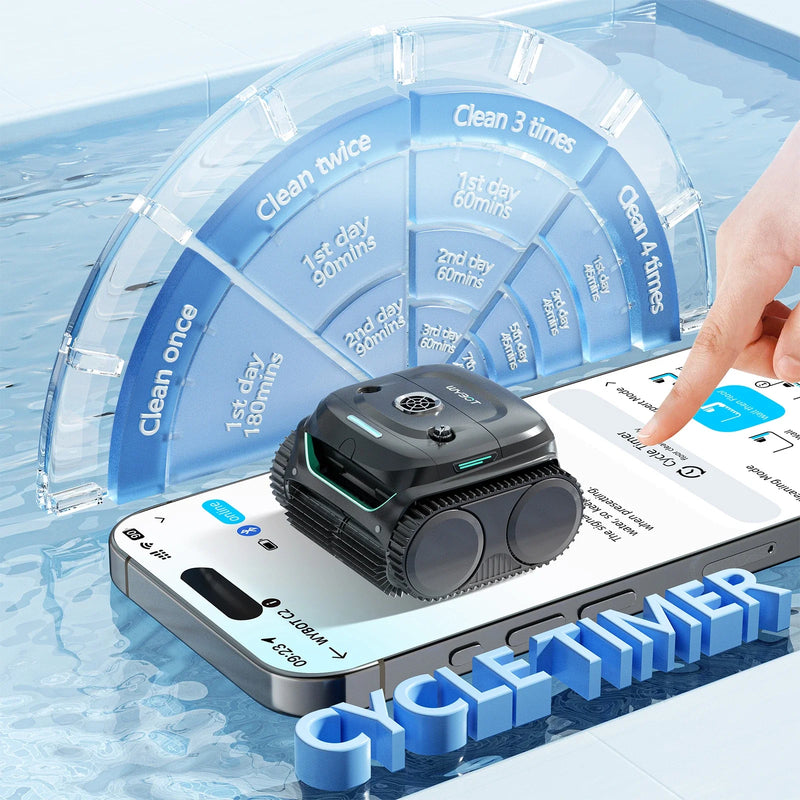
Battery operated pool vacuums have become a preferred choice for modern pool owners because they combine convenience, portability, and efficient cleaning performance. Unlike traditional suction-side cleaners that rely on the pool pump system, cordless pool vacuums use rechargeable batteries and independent motors to clean the pool floor, walls, and waterline areas.
Their cordless design eliminates tangled cables and allows greater movement across different pool shapes and sizes. These cleaners are also easier to set up and generally consume less energy compared to pressure-side cleaning systems.
Modern robotic pool vacuums are designed to handle both large debris and ultra-fine particles. This helps maintain clear water while reducing strain on the main pool filtration system.
How Battery Operated Pool Vacuums Handle Leaves and Fine Dirt
One of the most important factors for pool owners is whether a vacuum can effectively clean both large leaves and fine dirt particles. A high-quality battery operated pool vacuum usually combines strong suction power with advanced filtration technology.
Key performance features include:
| Feature | Benefit |
|---|---|
| Strong suction motor | Removes leaves, twigs, and debris |
| Fine filter basket | Captures sand and dust particles |
| Dual-layer filtration | Separates large and fine debris efficiently |
| Smart navigation | Improves pool coverage |
| High-capacity battery | Supports longer cleaning cycles |
Some advanced cordless robotic pool cleaners can capture particles as small as 180 microns or even finer, making them highly effective for pools exposed to pollen, dust, or sand.
Important Features to Look for in a Battery Powered Pool Vacuum
When choosing a cordless pool vacuum, it is important to compare several core features that directly affect cleaning efficiency and long-term usability.
Strong suction power is essential for collecting leaves, insects, and debris from the pool floor. Weak suction may simply move debris around instead of fully removing it.
A reliable filtration system is equally important, especially for pools affected by fine dust or sand. Multi-layer filters and fine mesh baskets help improve water clarity while reducing manual cleaning.
Battery runtime should match the size of the pool. Smaller pools may only require 60 to 90 minutes of operation, while larger inground pools may need 120 minutes or more for complete cleaning coverage.
Wall-climbing ability is another useful feature for inground pools. Some robotic cleaners can climb walls and clean waterlines, helping remove dirt and algae from hard-to-reach surfaces.
Smart navigation systems also improve cleaning efficiency. Advanced robotic cleaners use sensors and mapping algorithms to reduce missed spots and avoid unnecessary repeated movements.

Best Pool Types for Battery Operated Vacuums
Battery powered pool vacuums are suitable for a wide variety of pool designs and surface materials.
For above ground pools, cordless cleaners offer lightweight handling and quick deployment without complicated installation. They are especially useful for removing leaves and dirt during regular maintenance.
For inground pools, advanced robotic vacuums can clean large surfaces, deep ends, slopes, and walls efficiently.
Most battery operated vacuums are compatible with common pool surfaces, including vinyl liners, fiberglass, tile, concrete, and gunite finishes. Checking manufacturer recommendations before purchase is always recommended to ensure compatibility.
Benefits of Using a Cordless Robotic Pool Cleaner
Cordless robotic pool cleaners provide several long-term advantages beyond simple convenience.
They significantly reduce manual labor because they operate independently without requiring hoses or external pump connections. Pool owners can save time while maintaining cleaner water more consistently.
Many robotic cleaners also help improve water circulation during operation, reducing stagnant areas where dirt and algae may accumulate.
Because debris is collected directly inside the cleaner’s internal filter basket, less stress is placed on the pool’s primary filtration system. This may help extend the lifespan of pool pumps and filters.
Battery operated systems are also known for energy efficiency. Since they do not rely heavily on the pool pump system, electricity consumption is often lower compared to traditional cleaning methods.
Common Cleaning Challenges and Solutions
Swimming pools can experience different cleaning challenges depending on weather conditions and surrounding environments.
Heavy leaf accumulation is common during autumn or windy periods. In these situations, a vacuum with strong suction power and a large debris basket is especially useful.
Fine dust and sand often settle in the pool after storms or windy days. A cleaner equipped with ultra-fine filtration can remove these particles more effectively and help restore water clarity.
Pollen and algae particles may also contribute to cloudy water. Running the robotic cleaner more frequently and rinsing filters regularly can help maintain better water quality.
Tips for Maintaining Battery Operated Pool Vacuums
Regular maintenance helps maximize cleaning performance and extend the lifespan of cordless pool vacuums.
Filters and debris baskets should be cleaned thoroughly after every use to maintain strong suction and efficient water flow.
The battery should be charged according to manufacturer recommendations. Avoid leaving the unit completely discharged for long periods.
When not in use, the cleaner should be stored in a dry and shaded area to protect it from excessive heat and direct sunlight.
Brushes, wheels, and moving components should also be inspected regularly to ensure smooth operation and prevent unnecessary wear.
Some advanced robotic cleaners support firmware updates, which can improve navigation performance and cleaning efficiency over time.
Choosing the Right Battery Operated Pool Vacuum
Selecting the right cordless pool vacuum depends on several important factors.
| Consideration | Recommendation |
|---|---|
| Pool size | Match runtime to pool dimensions |
| Debris level | Choose strong suction and large basket |
| Fine dirt concerns | Select fine filtration systems |
| Wall cleaning needs | Choose wall-climbing models |
| Budget | Compare features and long-term value |
Pool owners dealing with both leaves and fine dirt should focus on balanced cleaning performance rather than suction power alone.
Popular Trends in Cordless Pool Cleaning
The cordless pool cleaning industry continues to develop with smarter and more efficient technologies.
Many modern robotic cleaners now include AI-based navigation systems, longer battery runtimes, lightweight designs, mobile app controls, and advanced filtration technologies.
These innovations improve cleaning accuracy, simplify maintenance, and make battery operated pool vacuums more practical for everyday pool care.

Battery operated pool vacuums that pick up leaves and fine dirt provide an effective and convenient solution for maintaining clean swimming pools. Their cordless operation, strong suction, and advanced filtration systems help simplify pool maintenance while improving water clarity.
Whether cleaning large debris after a storm or removing fine dust particles from the pool floor, a high-quality cordless robotic vacuum can save time and improve the overall swimming experience. Choosing the right model based on pool size, debris conditions, and filtration needs can help pool owners enjoy cleaner water throughout the entire swimming season.


