

Keeping an inground pool clean can be challenging, especially when leaves, dust, sand, pollen, and fine dirt constantly settle on the pool floor and walls. Manual cleaning takes time and effort, while traditional suction cleaners may struggle with large debris and microscopic particles at the same time. This is why many pool owners are now turning to robotic pool cleaners for a smarter and more efficient cleaning experience.
The best inground robotic pool cleaner for leaves and fine dirt combines strong suction power, intelligent navigation, advanced filtration, and long runtime. These features help maintain crystal clear water while reducing maintenance time. Modern robotic cleaners can scrub pool walls, clean waterlines, and trap even tiny debris particles that standard pool vacuums often miss.
For homeowners who want reliable performance and convenience, investing in a high-quality robotic cleaner can completely transform pool maintenance.
Key Features to Look for in a Robotic Pool Cleaner
Not all robotic pool cleaners are designed equally. Some models are optimized for large leaves and twigs, while others focus on fine dust and algae removal. The best models combine both capabilities for complete cleaning performance.
Strong suction power is one of the most important features. Leaves can quickly clog weak cleaners, especially after storms or windy days. A powerful motor allows the robot to collect heavy debris without losing cleaning efficiency.
Advanced filtration systems are equally important for capturing fine dirt. High-quality filters can trap sand, pollen, dust, and tiny particles that affect water clarity. Dual-layer filtration systems are especially useful for pools exposed to trees, landscaping, or windy environments.
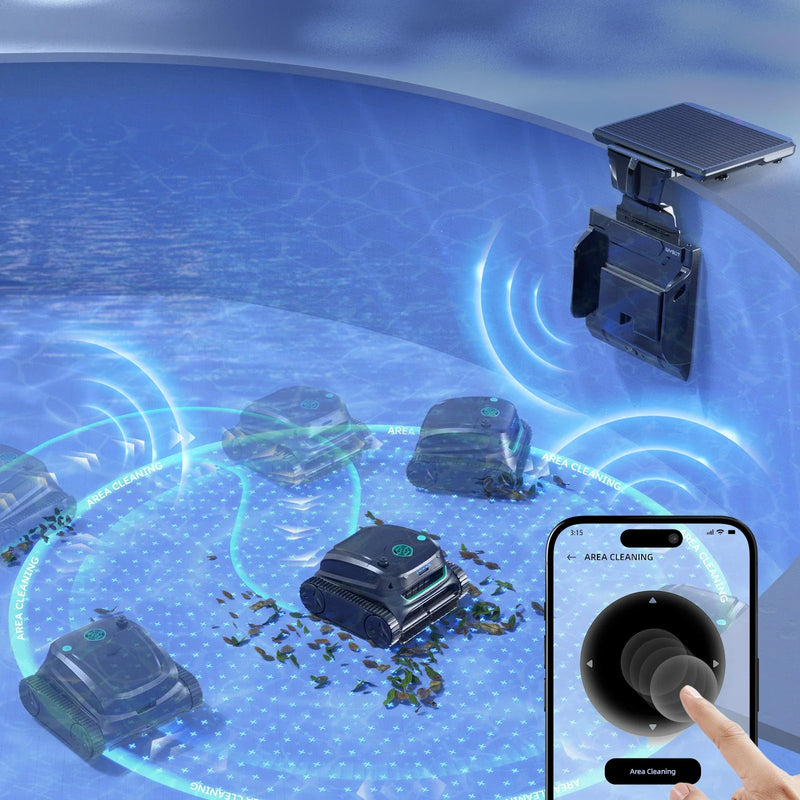
Smart navigation technology also improves cleaning coverage. Random movement patterns may leave debris behind, while intelligent path planning ensures the cleaner efficiently covers the entire pool floor, walls, and waterline.
Battery life and cleaning runtime should also be considered. Larger inground pools require extended runtime to complete full cleaning cycles without interruption.
Benefits of Using a Robotic Pool Cleaner for Leaves and Fine Dirt
One major advantage of robotic pool cleaners is their ability to work independently from the pool filtration system. Unlike pressure-side or suction-side cleaners, robotic models have their own motors and filtration systems, reducing stress on the pool pump.
Robotic cleaners also save energy. Many modern cordless models use efficient battery systems that consume less electricity compared to traditional pool cleaning methods.
Another benefit is consistent cleaning performance. Leaves and fine dirt often settle in corners, steps, and hard-to-reach areas. Robotic cleaners can navigate these spaces more effectively than manual vacuums.
Improved water circulation is another hidden advantage. As robotic cleaners move through the pool, they help distribute chemicals and reduce stagnant areas where algae may grow.
For busy homeowners, the convenience factor is significant. Automatic scheduling and app controls allow users to start cleaning cycles remotely, reducing daily maintenance responsibilities.
Why WYBOT Is a Popular Choice for Inground Pools
WYBOT has become a recognized name in robotic pool cleaning because of its balance of performance, innovation, and user-friendly design. Many pool owners choose WYBOT cleaners for their strong debris handling abilities and cordless convenience.
Models like the WYBOT C1 are designed specifically for inground pools and can efficiently collect both leaves and fine dirt. The cleaner combines powerful suction with intelligent route planning to maximize cleaning coverage.
The dual filtration system helps capture large debris while also trapping smaller particles that affect water clarity. This combination is especially useful for pools surrounded by trees or exposed to frequent dust and pollen.
Cordless operation is another major advantage. Without tangled cables, the cleaner can move more freely around the pool while making storage and handling easier for users.
Long runtime and wall-climbing capability also make WYBOT robotic cleaners suitable for medium and large inground pools. Many users appreciate the reduced maintenance effort and reliable cleaning consistency.

Comparing Cordless and Corded Robotic Pool Cleaners
Both cordless and corded robotic pool cleaners have advantages depending on the pool owner's needs.
Corded robotic cleaners typically provide continuous power and are suitable for very large pools that require extended cleaning sessions. However, cable management can sometimes become inconvenient, especially in pools with complex shapes.
Cordless robotic pool cleaners offer greater flexibility and convenience. They eliminate cable tangling issues and simplify operation. Modern battery technology has significantly improved runtime, allowing many cordless models to clean large inground pools effectively.
For homeowners prioritizing ease of use, cordless robotic cleaners are increasingly becoming the preferred choice. Many newer models also feature smart parking systems that guide the cleaner to the pool edge when cleaning is complete.
When choosing between corded and cordless options, pool size, cleaning frequency, and user preference should all be considered.
How Robotic Pool Cleaners Handle Different Types of Debris
Leaves and fine dirt require different cleaning approaches. Large leaves need wide suction inlets and strong debris flow systems to avoid clogging. Fine dirt, on the other hand, requires precision filtration capable of trapping microscopic particles.
Premium robotic pool cleaners are designed to handle both types of debris efficiently. Multi-layer filters separate larger debris from fine particles, helping maintain strong water flow throughout the cleaning cycle.
Some advanced robotic cleaners also feature adaptive cleaning modes. These systems automatically adjust suction power and movement patterns based on debris concentration and pool conditions.
Pools located near trees often experience seasonal debris accumulation. During autumn, leaves may quickly cover the pool floor, while spring pollen can create cloudy water. A robotic cleaner capable of handling year-round debris changes provides long-term value and convenience.
Maintenance Tips for Better Robotic Cleaner Performance
Regular maintenance helps robotic pool cleaners perform efficiently over time. Cleaning the filter basket after each use prevents airflow restrictions and maintains strong suction power.
Inspecting brushes and wheels regularly can also improve cleaning performance. Leaves, hair, and debris may become trapped around moving components, reducing mobility.
Battery care is especially important for cordless robotic cleaners. Storing the cleaner in a shaded and dry area helps extend battery lifespan and maintain charging performance.
Pool owners should also monitor water chemistry. Balanced pool water reduces mineral buildup inside the cleaner and helps protect internal components.
Updating software through mobile apps may improve navigation algorithms and cleaning efficiency for smart robotic pool cleaners equipped with app connectivity.
Choosing the Best Inground Robotic Pool Cleaner for Your Pool
The ideal robotic pool cleaner depends on several factors including pool size, debris type, surface material, and cleaning expectations.
For pools with heavy leaf accumulation, prioritize models with large debris baskets and strong suction systems. If fine dirt and sand are common issues, focus on advanced filtration capabilities.
Wall climbing and waterline cleaning functions are valuable for maintaining a fully clean pool appearance. Smart navigation technology also improves overall efficiency and reduces missed spots.
Cordless robotic cleaners are excellent for users seeking convenience and easy operation, while corded models may suit extremely large pools requiring longer cleaning sessions.
Reliable brands such as WYBOT continue to improve robotic cleaning technology by combining intelligent navigation, cordless flexibility, and high-performance filtration systems for modern pool owners.

Finding the best inground robotic pool cleaner for leaves and fine dirt can significantly improve pool maintenance efficiency and water quality. Advanced robotic cleaners reduce manual labor, save energy, and deliver consistent cleaning performance throughout the swimming season.
Features such as strong suction, intelligent navigation, advanced filtration, and long runtime all contribute to a cleaner and healthier pool environment. For homeowners seeking convenience and reliable results, robotic pool cleaners offer one of the most practical solutions available today.
Brands like WYBOT continue to stand out by offering cordless robotic cleaners capable of handling both large debris and microscopic dirt particles with ease. As robotic pool technology continues to evolve, pool owners can enjoy cleaner water and more free time with less maintenance effort.


