

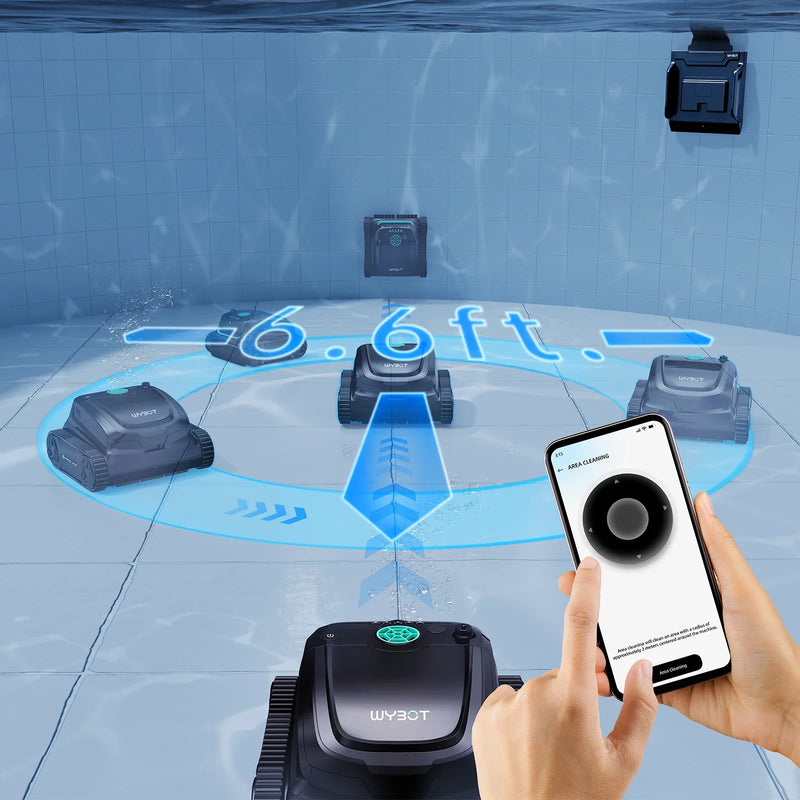
Keeping a swimming pool clean is one of the most important parts of pool ownership. Leaves, dirt, algae, insects, and debris can quickly build up and affect water quality, pool appearance, and even equipment lifespan. Traditional cleaning methods often require manual labor, time, and ongoing maintenance. This is why many pool owners are now turning to robotic pool cleaners as a smarter and more efficient solution.
A pool cleaning robot is designed to automatically clean the floor, walls, and sometimes even the waterline of a swimming pool. These devices use intelligent navigation systems, built-in filters, and powerful suction to remove debris while reducing the need for manual scrubbing. Choosing the right pool cleaning robot, however, depends on several factors including pool size, pool type, cleaning frequency, and budget.
Understanding your specific needs before buying can help you avoid unnecessary costs and ensure better long-term performance.
Know Your Pool Type Before Buying
One of the first things to consider when selecting a robotic pool cleaner is the type of pool you own. Different robots are designed for different pool structures, surfaces, and cleaning conditions.
Above-ground pools usually require lightweight and compact robots that can move efficiently in smaller spaces. These cleaners are often easier to store and typically cost less than models made for larger inground pools.
Inground pools, on the other hand, often need more advanced cleaning robots with stronger suction power, wall-climbing capabilities, and longer battery life or cable reach. Some inground pools also have deep ends, curved walls, or complex shapes that require intelligent navigation technology.
Pool surface materials also matter. Vinyl, fiberglass, concrete, and tile pools all have different textures. Some robotic cleaners are optimized for delicate surfaces, while others are built for heavy-duty scrubbing on rough concrete finishes.
Choosing a robot that matches your pool type helps improve cleaning efficiency and prevents unnecessary wear on the cleaner and the pool itself.
Corded vs Cordless Pool Cleaning Robots
Another important decision is whether to choose a corded or cordless robotic pool cleaner. Both options offer advantages depending on user preferences and pool conditions.
Corded robotic pool cleaners are known for delivering consistent power throughout the cleaning cycle. Since they are connected to an external power supply, they do not rely on battery capacity. This makes them suitable for large pools that require extended cleaning sessions. Many premium corded models also include advanced mapping systems and stronger suction performance.
However, cords can sometimes become tangled, especially in irregularly shaped pools. Storage may also require more attention.
Cordless pool cleaning robots have become increasingly popular because of their convenience and portability. Without a power cord, these robots can move freely around the pool and are generally easier to handle. They are ideal for pool owners looking for a quick and hassle-free cleaning experience.
Battery technology has improved significantly in recent years, allowing many cordless models to deliver longer runtimes and efficient cleaning performance. For small to medium-sized pools, cordless robots are often a practical and user-friendly choice.
The right option depends on your pool size, cleaning habits, and preference for convenience versus continuous power.

Evaluate Cleaning Coverage and Navigation Technology
Not all robotic pool cleaners provide the same level of cleaning coverage. Some entry-level models focus only on the pool floor, while more advanced robots can clean walls, steps, corners, and waterlines.
If your pool frequently collects debris along the walls or waterline, investing in a wall-climbing cleaner can improve overall cleanliness and reduce manual maintenance.
Navigation technology is another major factor. Basic robotic cleaners may move randomly around the pool, which can sometimes leave certain areas untouched. Advanced models use intelligent mapping systems, sensors, and route planning to clean more efficiently.
Features to look for include:
| Feature | Benefit |
|---|---|
| Smart Navigation | More efficient cleaning paths |
| Wall Climbing | Cleans walls and waterline |
| Obstacle Detection | Prevents getting stuck |
| Multiple Cleaning Modes | Customized cleaning cycles |
| Auto Parking | Easier retrieval after cleaning |
Modern robotic pool cleaners with intelligent navigation can save energy and reduce cleaning time while delivering better coverage.
Consider Filter Capacity and Debris Handling
Pools collect different types of debris depending on the surrounding environment. Some pools mainly deal with fine dirt and sand, while others regularly collect leaves, twigs, or insects.
Choosing the right filtration system is essential for maintaining water clarity and reducing strain on your pool system.
Fine filters are excellent for capturing small particles such as dust, pollen, and algae. Larger filter baskets are better suited for pools surrounded by trees because they can hold more leaves and debris without requiring constant emptying.
Many modern robotic pool cleaners now feature top-access filter baskets, making cleaning and maintenance much easier for users. Quick-clean filter systems reduce downtime and improve overall convenience.
Before purchasing, consider the typical debris conditions in your pool area. A cleaner that performs well in one environment may not be ideal for another.
Battery Life and Cleaning Cycle Duration
For cordless robotic pool cleaners, battery life plays a critical role in performance. A cleaner with insufficient runtime may fail to complete a full cleaning cycle, especially in larger pools.
Most cordless pool robots offer runtimes ranging from 60 to 180 minutes. Smaller pools may only require a short cleaning session, while larger inground pools often need extended operating time.
Fast charging technology can also improve convenience. Some premium models recharge in just a few hours, allowing for more flexible cleaning schedules.
Cleaning cycle options are another useful feature. Many robots allow users to select quick cleaning, deep cleaning, or eco cleaning modes depending on the pool condition.
Understanding how often your pool needs cleaning can help you choose a robot with the right battery performance and cycle settings.
Smart Features and App Control
Technology has significantly improved the pool cleaning experience in recent years. Many robotic pool cleaners now include smart features that simplify operation and maintenance.
Mobile app connectivity allows users to start, stop, schedule, and monitor cleaning cycles remotely. Some apps also provide battery updates, maintenance reminders, and cleaning reports.
Advanced robotic cleaners may include:
- Wi-Fi or Bluetooth connectivity
- Scheduled cleaning programs
- Remote steering control
- Firmware updates
- Smart parking systems
While smart features may increase the initial cost, they can improve convenience and help automate routine pool maintenance.
For busy homeowners, app-controlled robotic cleaners can save time and make pool care much easier throughout the swimming season.
Energy Efficiency and Long-Term Cost Savings
Many pool owners focus only on the purchase price when choosing a robotic cleaner, but long-term operating costs are equally important.
Robotic pool cleaners are generally more energy-efficient than traditional suction-side or pressure-side cleaners because they operate independently from the pool pump system. This can help reduce electricity consumption over time.
Efficient robots also minimize chemical usage by improving water circulation and debris removal. Cleaner water often requires fewer corrective treatments and less manual intervention.
When evaluating value, consider factors such as:
| Cost Factor | Long-Term Impact |
|---|---|
| Energy Efficiency | Lower electricity bills |
| Durable Components | Reduced repair costs |
| Easy Maintenance | Less downtime |
| Efficient Filtration | Better water quality |
| Reliable Navigation | Faster cleaning cycles |
A higher-quality robotic pool cleaner may cost more upfront but provide better reliability and lower maintenance expenses in the long run.
Choosing the Right Robot for Your Lifestyle
Every pool owner has different expectations and maintenance habits. Some people want a fully automated cleaning experience, while others simply need occasional assistance with debris removal.
If you frequently host pool parties or use your pool daily, investing in a high-performance robotic cleaner with advanced cleaning coverage may be worthwhile.
For smaller residential pools with lighter debris, a compact cordless cleaner may provide all the performance you need at a more affordable price.
Families with limited time often benefit from smart robotic cleaners with scheduling functions and low-maintenance filters.
The best robotic pool cleaner is not necessarily the most expensive model. It is the one that matches your pool size, cleaning requirements, and lifestyle preferences.

Choosing the right pool cleaning robot requires careful consideration of your pool type, cleaning needs, budget, and desired features. Understanding the differences between corded and cordless models, navigation systems, filtration capabilities, and smart technologies can help you make a more informed decision.
A reliable robotic pool cleaner can save time, improve water quality, reduce manual labor, and make pool ownership more enjoyable. As robotic cleaning technology continues to evolve, pool owners now have more options than ever before to keep their pools clean with minimal effort.
Investing in the right cleaner today can lead to years of easier maintenance and a consistently cleaner swimming environment.


