

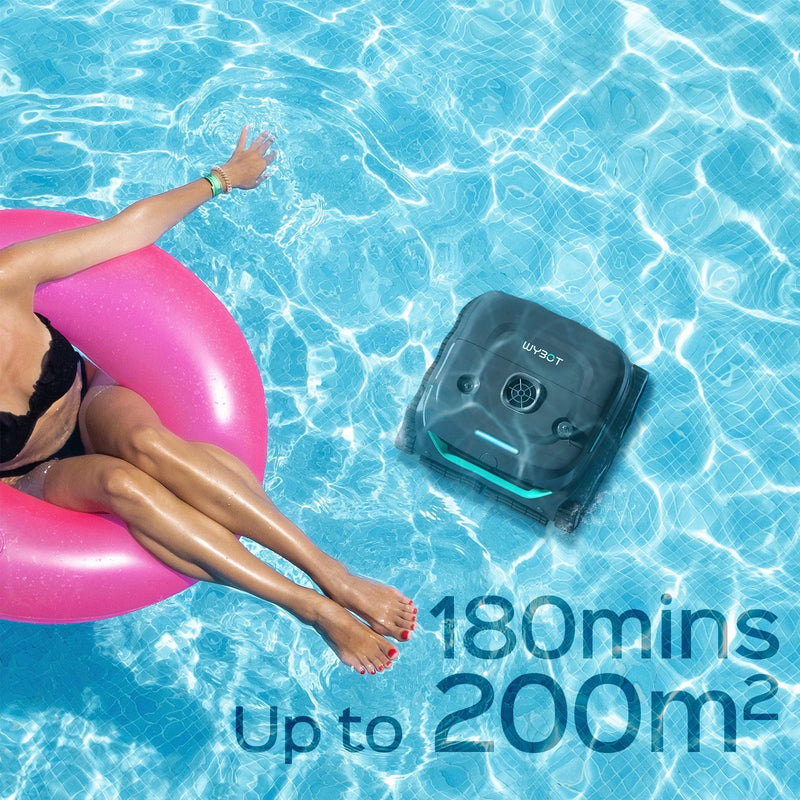
Cordless robotic pool cleaners have changed the way pool owners maintain both above ground and inground pools. Without long hoses or tangled power cords, these cleaners offer greater convenience, easier setup, and more flexible movement in the water. However, one feature separates an average cordless robotic pool cleaner from a truly reliable one: battery performance.
Battery technology directly affects cleaning time, charging speed, cleaning power, navigation efficiency, and long-term reliability. A robotic pool cleaner with weak battery performance may stop halfway through a cleaning cycle, struggle to climb walls, or lose suction before finishing the job. On the other hand, a model with advanced battery management can clean larger pools more efficiently while maintaining strong suction and stable movement.
Today’s market includes many cordless pool robots from brands like WYBOT, Dolphin, Aiper, Polaris, and Seauto. While each brand promotes smart features and convenience, battery efficiency often becomes the deciding factor for real-world users. This review focuses specifically on battery-related performance to help pool owners understand which features matter most before buying.
How Battery Technology Has Improved in Modern Pool Robots
Early cordless robotic pool cleaners often suffered from short runtimes and inconsistent cleaning performance. Many units could only clean for 45 to 60 minutes before needing a recharge. This limited their effectiveness, especially for larger inground pools.
Modern cordless pool cleaners now use improved lithium-ion battery systems that provide longer runtime, faster charging, and better energy management. Some premium models can operate for up to 3 hours on a single charge while maintaining powerful suction throughout the cleaning cycle.
Manufacturers have also improved intelligent battery control systems. These systems help optimize energy usage depending on pool shape, debris level, and cleaning mode. Instead of wasting battery power on unnecessary movement, advanced robotic cleaners use smart navigation to maximize cleaning efficiency.
Another important improvement is battery durability. Newer batteries are designed to maintain performance over hundreds of charging cycles. This reduces long-term maintenance costs and improves product lifespan.
Among current brands, WYBOT has gained attention for balancing runtime, charging speed, and overall cleaning efficiency. Models like the WYBOT F1 and WYBOT S2 series focus heavily on battery optimization, making them competitive choices in the cordless pool cleaner category.
Runtime Comparison Between Popular Cordless Pool Cleaners
Runtime remains one of the most important factors when evaluating cordless robotic pool cleaners. Pool owners want enough battery life to clean the entire pool in one session without interruptions.
Below is a general comparison of runtime performance among several popular cordless robotic pool cleaner brands.
| Brand/Model | Average Runtime | Charging Time | Suitable Pool Size | Battery Performance Notes |
|---|---|---|---|---|
| WYBOT F1 | Up to 180 mins | 3-4 hours | Large inground pools | Excellent battery efficiency and stable suction |
| WYBOT S2 | Up to 210 mins | 3 hours | Medium to large pools | Smart energy-saving navigation |
| Dolphin Liberty Series | 90-150 mins | 4-6 hours | Medium pools | Reliable but slower charging |
| Aiper Seagull Models | 90-120 mins | 3-4 hours | Small to medium pools | Good for light cleaning |
| Polaris Freedom | 150 mins | 5 hours | Large pools | Strong cleaning but higher power usage |
| Seauto Crab | 120-150 mins | 3.5 hours | Medium pools | Decent runtime with wall climbing |
The table shows how battery efficiency varies significantly between brands. Models with longer runtime typically perform better for large pools, especially when cleaning floors, walls, and waterlines during a single cycle.
WYBOT models stand out because they combine long runtime with relatively fast charging speeds. This balance is especially useful for pool owners who clean frequently during heavy swimming seasons.

Real-World Battery Performance and Cleaning Efficiency
Manufacturer specifications often look impressive, but real-world performance matters more. Several factors affect how long a cordless robotic pool cleaner can actually operate.
Pool size plays a major role. A cleaner may achieve its maximum runtime in a small rectangular pool but consume more energy in irregular-shaped pools with slopes, deep ends, and obstacles.
Debris type also impacts battery usage. Heavy leaves, sand, algae, and dirt require stronger suction power and more motor activity. Cleaners working in heavily contaminated pools naturally consume battery power faster.
Wall climbing is another major factor. Climbing walls and cleaning waterlines requires additional motor power compared to floor-only cleaning. Some cheaper cordless robots lose significant runtime when wall-climbing features are activated.
Advanced models with intelligent route planning perform better because they avoid random movement. Instead of repeatedly covering the same areas, smart navigation systems clean more efficiently while conserving energy.
WYBOT robotic pool cleaners are often praised for maintaining consistent suction even as battery levels decrease. Some lower-end models from competing brands may weaken noticeably during the final portion of the cleaning cycle.
Consistent power delivery is important because weak suction near the end of a cycle can leave debris behind, forcing pool owners to run additional cleaning sessions.
Charging Speed and User Convenience
Fast charging has become an increasingly important feature for cordless robotic pool cleaners. Pool owners prefer cleaners that can quickly return to operation, especially during periods of heavy pool use.
Some older robotic pool cleaners require 5 to 6 hours for a full recharge. While this may be acceptable for occasional use, it becomes inconvenient during peak summer months when pools require frequent cleaning.
Newer battery systems support rapid charging technology. Models like the WYBOT S2 reduce charging times while still providing extended runtime. Faster charging improves overall convenience and allows more flexible cleaning schedules.
Battery docking systems have also improved. Magnetic charging connectors, waterproof charging ports, and easier retrieval systems make modern cordless cleaners more user-friendly.
Another convenience factor is automatic parking. Many robotic pool cleaners automatically move toward the pool edge when battery levels become low. This prevents users from manually searching underwater for the device.
Premium cordless pool cleaners now combine battery management with mobile app control. Users can monitor battery status, adjust cleaning modes, and schedule cleaning cycles directly from their smartphones.
Battery Longevity and Long-Term Value
Long-term battery durability is critical because battery replacement can become expensive. A robotic pool cleaner with poor battery lifespan may lose efficiency after only one or two seasons.
Several factors influence battery longevity:
- Charging cycle quality
- Heat protection systems
- Waterproof battery sealing
- Energy management software
- Proper storage during winter
High-quality lithium-ion batteries typically maintain strong performance for several years when properly maintained. Premium models often include battery protection systems that prevent overcharging, overheating, and excessive discharge.
WYBOT and several other leading brands have improved battery protection technology to extend lifespan and maintain stable performance over time.
When evaluating long-term value, buyers should consider more than just purchase price. A cheaper robotic cleaner with weak battery durability may ultimately cost more due to battery replacement or reduced cleaning effectiveness.
Investing in a model with efficient energy management and durable battery components can reduce overall ownership costs while improving cleaning reliability.
Common Battery Problems Pool Owners Should Know
Even high-quality cordless robotic pool cleaners can experience battery-related issues if not properly maintained. Understanding common problems helps users extend battery life and avoid performance loss.
One common issue is incomplete charging. If charging contacts become dirty or corroded, the battery may not fully recharge. Regular cleaning of charging ports helps maintain proper power transfer.
Another problem is long-term storage without charging. Leaving lithium-ion batteries completely drained for extended periods can permanently reduce capacity.
Extreme temperatures can also affect battery health. Storing robotic pool cleaners in direct sunlight or freezing environments may shorten battery lifespan.
Some pool owners overload their robotic cleaners by attempting to clean excessive debris beyond the unit’s intended capacity. Heavy strain on motors and filtration systems can increase battery wear.
Firmware updates also matter. Smart robotic cleaners occasionally receive software updates that improve battery optimization and navigation efficiency.
Proper maintenance significantly improves both runtime consistency and long-term battery reliability.
Which Cordless Robotic Pool Cleaner Offers the Best Battery Performance
The best cordless robotic pool cleaner depends on pool size, cleaning needs, and budget. However, battery performance remains one of the most important categories for evaluating overall value.
For small pools, entry-level cordless cleaners with 90 to 120 minutes of runtime may be sufficient. These models work well for light debris and occasional cleaning.
For medium and large pools, longer runtime becomes essential. Models with advanced navigation and efficient battery management deliver better overall cleaning coverage.
WYBOT models continue gaining popularity because they balance runtime, charging speed, suction performance, and affordability. The WYBOT F1 and S2 series are especially competitive for pool owners seeking strong battery performance without premium-level pricing.
Dolphin and Polaris also offer reliable cleaning systems, but some models require longer charging times or come at higher price points.
Ultimately, buyers should prioritize real-world runtime, energy efficiency, and long-term battery durability rather than focusing only on advertised specifications.

Battery technology has become the foundation of modern cordless robotic pool cleaners. Longer runtime, faster charging, smart energy management, and durable lithium-ion systems now define the best-performing models on the market.
As cordless pool cleaners continue evolving, manufacturers are focusing heavily on improving battery efficiency and cleaning intelligence. These improvements help pool owners save time while maintaining cleaner, healthier swimming pools with less manual effort.
When choosing a cordless robotic pool cleaner, evaluating battery performance carefully can make a major difference in daily convenience and long-term satisfaction. Models that combine efficient navigation, strong suction, and stable battery output provide the best overall cleaning experience.
For many pool owners, investing in a high-quality cordless robotic cleaner with advanced battery management ultimately delivers better reliability, lower maintenance hassle, and more enjoyable pool ownership.


