

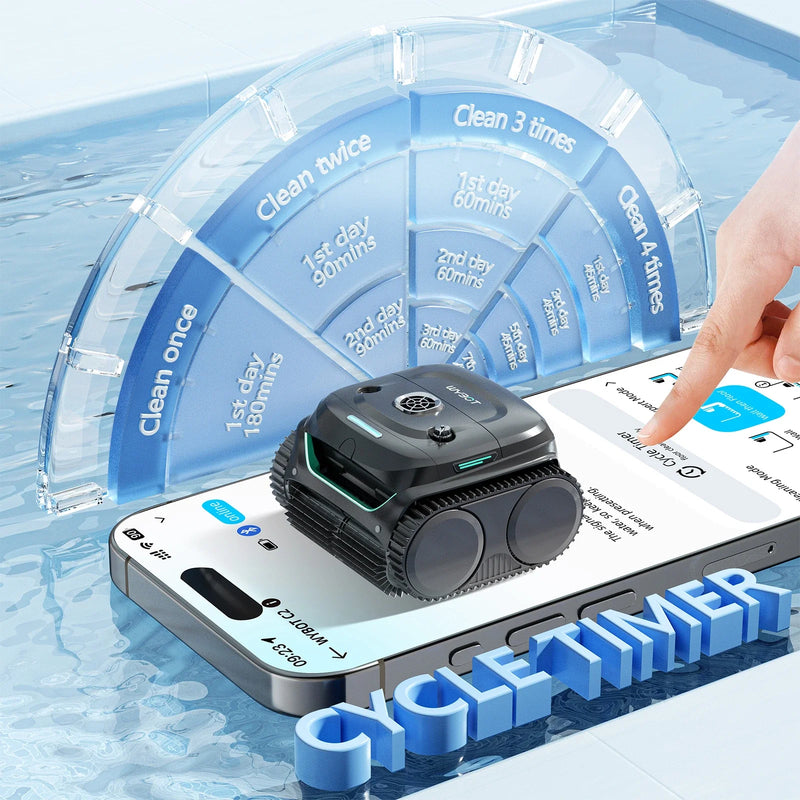
The pool cleaning industry has undergone a significant transformation in recent years, with cordless robotic pool cleaners emerging as a popular alternative to traditional cleaning methods. For pool owners seeking convenience, efficiency, and smarter maintenance solutions, the question naturally arises: is a cordless pool cleaner robot truly better than traditional cleaners?
Understanding Traditional Pool Cleaning Methods
Traditional pool cleaning typically involves manual tools or suction/pressure-side cleaners connected to your pool’s filtration system. These include handheld vacuums, telescopic poles, hoses, and skimmers.
From an experience standpoint, many pool owners are familiar with these methods because they have been used for decades. However, familiarity does not always translate to efficiency.
Manual cleaning requires physical effort, time, and consistent attention. Suction-side cleaners rely heavily on your pool pump, which can lead to increased energy consumption and wear on your filtration system. Pressure-side cleaners often require booster pumps, adding to installation complexity and operational costs.
While traditional cleaners are generally more affordable upfront, their long-term costs—maintenance, energy usage, and time investment—can add up significantly.
What Is a Cordless Pool Cleaner Robot?
Cordless robotic pool cleaners are self-contained, battery-powered devices designed to clean pool floors, walls, and sometimes waterlines without requiring hoses or external connections.
These devices use built-in motors, intelligent navigation systems, and advanced filtration to operate independently from your pool’s existing system. Most models are designed for easy deployment: simply charge, place in the pool, and let the robot handle the rest.
From a technical perspective, modern cordless robots incorporate sensors, gyroscopes, and optimized cleaning paths to maximize coverage while minimizing cleaning time.
Key Advantages of Cordless Pool Cleaner Robots
One of the most compelling advantages of cordless pool cleaner robots is convenience. Without hoses or cables, users can avoid tangling issues and complicated setups. This makes them particularly appealing for busy homeowners who value simplicity.
Another major benefit is energy efficiency. Since cordless robots operate independently of the pool pump, they reduce strain on your filtration system and can lower overall energy consumption.
Cleaning performance is also a standout factor. High-quality cordless robots can effectively capture debris ranging from fine sand to leaves, thanks to multi-layer filtration systems. Some models even feature wall-climbing capabilities and smart route planning.
From an expertise viewpoint, many industry tests and user reviews consistently show that robotic cleaners outperform traditional methods in terms of cleaning consistency and coverage.
Additionally, portability and storage are improved. Without bulky hoses and external equipment, cordless robots are easier to handle and store, making them suitable for various pool sizes and types.

Traditional Cleaners: Are They Still Relevant?
It would be inaccurate to dismiss traditional cleaners entirely. They still hold value in certain scenarios.
For small pools or occasional cleaning, manual tools can be cost-effective and sufficient. Pool owners who prefer hands-on maintenance may also find traditional methods more controllable.
Additionally, suction-side cleaners are relatively simple and can work well for basic debris removal in pools with robust filtration systems.
Performance Comparison: Cordless Robots vs Traditional Cleaners
When comparing performance, several factors must be considered, including cleaning efficiency, ease of use, cost, and maintenance.
| Feature | Cordless Pool Cleaner Robot | Traditional Cleaners |
|---|---|---|
| Ease of Use | Very easy, plug-and-play | Requires setup and effort |
| Cleaning Coverage | Comprehensive, smart navigation | Limited, depends on user/system |
| Energy Efficiency | High, independent system | Lower, relies on pool pump |
| Maintenance | Moderate (filter cleaning) | Ongoing manual effort |
| Initial Cost | Higher | Lower |
| Long-Term Cost | Potentially lower | Can be higher over time |
From a professional evaluation perspective, cordless robotic cleaners provide a more modern, efficient solution, particularly for medium to large pools or frequent cleaning needs.
Which Option Is Better for You?
Choosing between a cordless pool cleaner robot and a traditional cleaner ultimately depends on your specific needs, budget, and lifestyle.
If you prioritize convenience, time savings, and advanced cleaning performance, a cordless robotic cleaner is likely the better investment. It is especially suitable for busy households, larger pools, or users who want minimal manual involvement.
On the other hand, if budget constraints are a primary concern or your pool requires only occasional maintenance, traditional cleaning tools may still be a practical choice.
It is also worth considering hybrid approaches, where a robotic cleaner handles routine maintenance while manual tools are used for spot cleaning.
Is Cordless Really Better?
Based on real-world usage, technical analysis, and industry insights, cordless pool cleaner robots generally offer superior performance, convenience, and efficiency compared to traditional cleaners.
While they require a higher initial investment, their long-term benefits—reduced labor, improved cleaning quality, and lower system strain—make them a compelling choice for modern pool owners.
In conclusion, cordless pool cleaner robots are not just a trend; they represent the future of pool maintenance. For those seeking a smarter, more efficient way to keep their pools clean, the answer is clear: cordless is, in most cases, the better option.


