

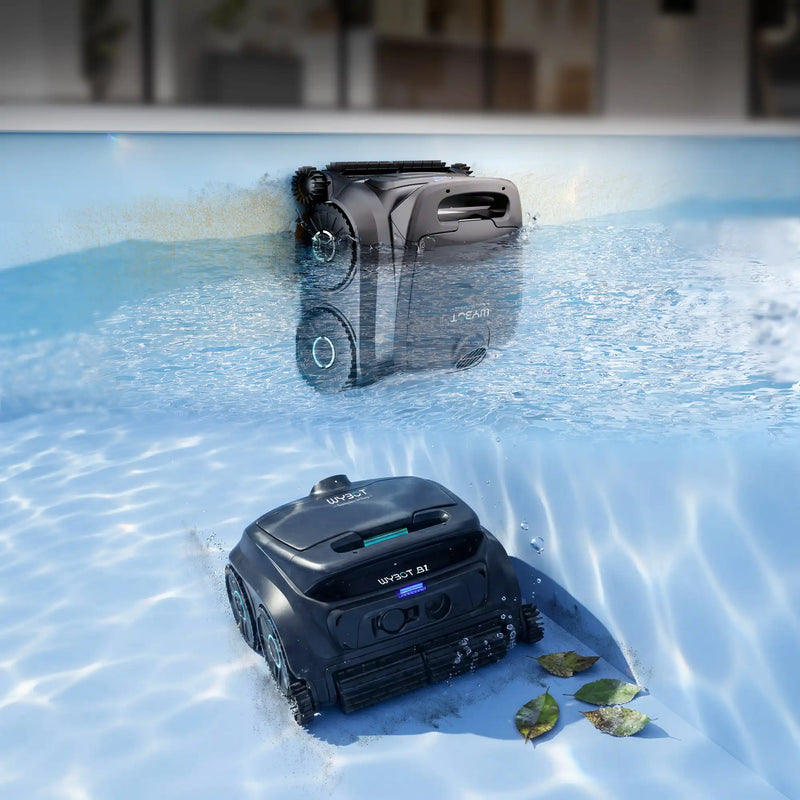
Keeping a swimming pool clean is essential for water quality, swimmer safety, and long-term maintenance. Traditional cleaning methods often require significant time and effort, which is why robotic pool cleaners have become increasingly popular among pool owners. Modern pool cleaning robots combine intelligent navigation, powerful suction, energy efficiency, and cordless convenience to simplify pool care.
However, not every robotic cleaner works equally well for every pool. Above ground pools, inground pools, vinyl pools, concrete pools, and large commercial-style pools all have different cleaning needs. Choosing the best pool cleaning robot depends on factors such as pool size, shape, debris type, surface material, and budget.
This guide explores the best pool cleaning robot options for different pool types while helping buyers understand the most important features to consider before making a purchase.
Why Pool Cleaning Robots Are Becoming Essential
Pool owners are increasingly switching to robotic pool cleaners because they save time and reduce manual labor. Unlike suction-side or pressure-side cleaners, robotic cleaners operate independently from the pool filtration system. They use built-in motors and advanced navigation systems to clean the floor, walls, and waterline efficiently.
Modern robotic pool cleaners can remove leaves, sand, algae, bugs, and fine debris while consuming less energy than traditional cleaning systems. Cordless models have also become popular because they eliminate cable tangling and improve mobility.
Some advanced models now include smart sensors, app controls, automatic parking, and multiple cleaning modes. These features make robotic cleaners ideal for homeowners who want consistent pool maintenance with minimal effort.
Best Pool Cleaning Robot for Above Ground Pools
Above ground pools require lightweight and compact cleaning robots. Since these pools are usually smaller and shallower, users typically look for affordability, simplicity, and easy maintenance.
The best robotic cleaners for above ground pools should include:
| Feature | Why It Matters |
|---|---|
| Lightweight Design | Easier to remove and carry |
| Cordless Operation | Prevents cable tangling |
| Strong Suction | Removes leaves and dirt effectively |
| Long Battery Life | Covers the full pool in one cycle |
| Easy Filter Access | Simplifies cleaning and maintenance |
Models like the WYBOT A1 are popular for above ground pools because they combine cordless convenience with efficient cleaning performance. Their compact design allows them to move smoothly across flat pool floors while collecting debris efficiently.
For smaller pools, users do not necessarily need advanced wall-climbing functions. Instead, battery efficiency and quick cleaning cycles often matter more.
Best Pool Cleaning Robot for Inground Pools
Inground pools are more demanding because they are usually larger, deeper, and more complex in shape. These pools often require robotic cleaners capable of cleaning floors, walls, steps, and waterlines.
The ideal inground pool robot should provide:
- Intelligent path planning
- Wall-climbing capability
- High-capacity filtration
- Extended runtime
- Strong traction for different surfaces
Robotic cleaners designed for inground pools often use advanced gyroscope navigation and multiple motors to maximize cleaning coverage. Premium models can detect obstacles, optimize cleaning routes, and avoid unnecessary repetition.
The WYBOT F1 and other advanced robotic cleaners are designed for larger inground pools where stronger suction and longer battery life are important. These models can handle heavy debris such as leaves, twigs, and sand while maintaining stable climbing performance.
For homeowners with irregular pool shapes, smart navigation technology becomes especially valuable because it reduces missed areas during cleaning cycles.

Best Pool Cleaning Robot for Vinyl Pools
Vinyl liner pools require gentle but effective cleaning. Harsh brushes or excessive traction can potentially damage soft vinyl surfaces over time.
When choosing a robotic cleaner for vinyl pools, buyers should prioritize:
| Recommended Feature | Benefit |
|---|---|
| Soft Brushes | Protect vinyl surfaces |
| Adjustable Suction | Prevents liner stress |
| Lightweight Body | Reduces pressure on pool floor |
| Smart Navigation | Avoids repeated friction |
| Fine Filtration | Captures small debris safely |
Many cordless pool robots are suitable for vinyl pools because they are lighter and easier to control. Pool owners should avoid overly aggressive commercial-grade cleaners unless specifically designed for vinyl compatibility.
Modern robots with intelligent movement systems are ideal because they clean efficiently without repeatedly scrubbing the same area.
Best Pool Cleaning Robot for Concrete and Gunite Pools
Concrete and gunite pools are durable but often accumulate algae, dirt, and stubborn debris on rough surfaces. These pools require stronger cleaning performance than vinyl or fiberglass pools.
The best robotic cleaners for concrete pools typically feature:
- Powerful scrubbing brushes
- High suction power
- Wall and tile line cleaning
- Dual filtration systems
- Enhanced traction control
Concrete pools can develop algae buildup more easily due to their porous surfaces. Therefore, robotic cleaners with active scrubbing systems provide significant advantages.
High-performance robotic cleaners can deeply clean rough surfaces while maintaining energy efficiency. Models with large debris baskets are also beneficial because outdoor concrete pools often collect more leaves and dirt.
For pools located near trees or windy areas, choosing a cleaner with oversized filtration capacity can reduce maintenance frequency.
Best Pool Cleaning Robot for Fiberglass Pools
Fiberglass pools have smooth surfaces that require balanced cleaning performance. Since these pools resist algae growth more effectively, owners usually focus on maintaining water clarity and removing fine debris.
Important features for fiberglass pool robots include:
| Feature | Importance |
|---|---|
| Smooth Wheel Movement | Prevents slipping |
| Fine Mesh Filters | Captures dust and sand |
| Smart Route Planning | Improves efficiency |
| Energy Efficiency | Reduces operating costs |
| Quiet Operation | Enhances user experience |
Because fiberglass pools are smooth, robotic cleaners with advanced navigation systems can move more efficiently and complete cleaning cycles faster.
Cordless robotic cleaners are particularly attractive for fiberglass pool owners because they provide easier handling and modern convenience.
Cordless vs Corded Pool Cleaning Robots
One of the biggest decisions for buyers is choosing between cordless and corded robotic pool cleaners.
Cordless Pool Cleaning Robots
Cordless robots are becoming increasingly popular because they offer:
- Greater freedom of movement
- No cable tangling
- Easier storage
- Faster setup
- Safer operation around water
Modern cordless pool cleaners now provide improved battery life and stronger suction compared to earlier generations. Many users appreciate the simplicity of dropping the robot into the pool and starting a cleaning cycle instantly.
However, runtime limitations may still affect extremely large pools.
Corded Pool Cleaning Robots
Corded models continue to offer advantages such as:
- Unlimited runtime
- Consistent power output
- Stronger long-duration performance
- Suitable for very large pools
The downside is that cables may tangle during operation, especially in irregular pool shapes.
For most residential users, cordless robotic pool cleaners now provide an excellent balance between convenience and performance.
Smart Features That Improve Pool Cleaning Performance
Today’s best robotic pool cleaners include advanced smart features that improve efficiency and user experience.
Some popular technologies include:
| Smart Feature | Function |
|---|---|
| App Control | Remote operation and scheduling |
| Smart Navigation | Optimized cleaning routes |
| Auto Parking | Returns robot to pool edge |
| Multiple Cleaning Modes | Floor, wall, or full-pool cleaning |
| Water Sensors | Activates only in water |
These technologies help reduce energy consumption while improving cleaning accuracy.
Automatic scheduling is especially useful for busy homeowners who want clean water without constant manual maintenance.
How to Choose the Right Pool Cleaning Robot
Choosing the right robotic cleaner depends on several practical considerations.
Pool Size
Larger pools require longer battery life or corded operation. Smaller pools may only need basic floor cleaning.
Pool Shape
Complex pool shapes benefit from smart navigation systems that reduce missed areas.
Debris Type
Pools surrounded by trees require stronger suction and larger filters.
Surface Material
Vinyl, fiberglass, and concrete pools all require different cleaning approaches.
Budget
Entry-level robots handle basic cleaning, while premium models offer advanced navigation and app connectivity.
Comparing features carefully helps buyers avoid overspending on unnecessary functions.
Why Robotic Pool Cleaners Are a Smart Long-Term Investment
Although robotic pool cleaners require an upfront investment, they can significantly reduce long-term maintenance costs.
Benefits include:
- Lower manual labor
- Reduced pool filter strain
- Improved water circulation
- Better debris removal
- Reduced chemical usage
Clean pools also improve swimmer comfort and extend the life of pool equipment.
Modern robotic cleaners are designed to operate efficiently while consuming relatively low electricity. Over time, this energy efficiency can help reduce overall operating costs compared to traditional systems.
The best pool cleaning robot depends largely on the type of pool you own and your specific cleaning needs. Above ground pools benefit from lightweight cordless models, while large inground pools often require advanced navigation and wall-climbing performance.
Vinyl pools need gentle cleaning systems, whereas concrete pools demand stronger scrubbing power. Fiberglass pools benefit from efficient navigation and fine filtration.
As robotic pool cleaner technology continues to improve, modern cordless models are becoming more powerful, smarter, and easier to use. Features like app control, intelligent route planning, and automatic parking now make pool maintenance far more convenient than ever before.
For homeowners seeking cleaner water, less maintenance effort, and more time to enjoy their pool, investing in the right robotic pool cleaner can provide excellent long-term value.


