

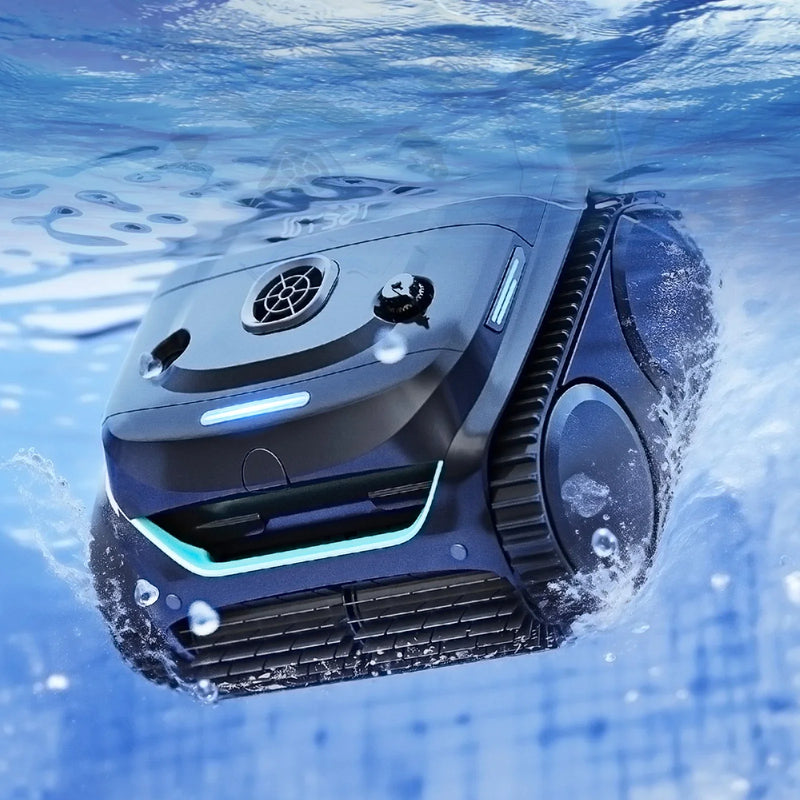
Battery powered swimming pool vacuums have quickly become a popular choice for pool owners who want a convenient, cordless cleaning solution. But one of the most common and practical questions buyers ask is simple: how long does the battery actually last? The answer depends on several factors, including battery capacity, cleaning mode, pool size, and overall design efficiency. In this comprehensive guide, we’ll break down real-world battery performance, what affects it, and how to choose the right model for your needs.
Understanding Battery Life in Pool Vacuums
Battery life in a cordless pool vacuum is typically measured in runtime per charge. Most modern units offer anywhere from 60 minutes to 180 minutes of operation. Entry-level models usually fall on the lower end of that range, while premium robotic pool cleaners can run significantly longer.
However, runtime alone doesn’t tell the full story. Two vacuums may both advertise 90 minutes of battery life, but one might clean more efficiently within that time due to better navigation, suction power, and filtration systems. This is why understanding both battery duration and cleaning performance is essential when evaluating a product.
Key Factors That Affect Battery Duration
Several technical and environmental factors influence how long a battery powered pool vacuum will last during operation.
Battery capacity is one of the most important elements. Measured in milliamp-hours (mAh) or watt-hours (Wh), a larger battery typically provides longer runtime. High-end models often use lithium-ion batteries with optimized energy management systems.
Cleaning mode also plays a significant role. Many advanced robotic vacuums offer multiple modes such as quick clean, standard clean, and deep clean. A quick cleaning cycle may last only 60 minutes, while a deep cleaning mode may consume more power and reduce runtime.
Pool size and surface type matter as well. Cleaning a small above-ground pool requires less energy compared to a large in-ground pool with complex shapes. Similarly, rough surfaces like concrete demand more suction power than smooth vinyl, which can impact battery life.
Debris load is another overlooked factor. Pools with heavy leaves, sand, or algae buildup require more effort from the motor, leading to faster battery consumption.

Typical Battery Life by Product Category
Battery performance varies depending on the type of pool vacuum you choose.
Handheld battery powered pool vacuums usually offer between 30 and 90 minutes of runtime. These are ideal for spot cleaning, stairs, and small pools.
Entry-level cordless robotic pool cleaners typically run for about 60 to 90 minutes. They are suitable for smaller pools or light cleaning tasks.
Mid-range robotic vacuums often deliver 90 to 120 minutes of battery life, striking a balance between performance and efficiency. These models are popular among average residential pool owners.
High-end cordless robotic pool cleaners can operate for 120 to 180 minutes or more. They often feature intelligent navigation, energy-saving algorithms, and larger battery capacities, making them ideal for large or heavily used pools.
Charging Time and Efficiency
Battery life isn’t just about how long a vacuum runs—it’s also about how quickly it recharges. Most battery powered pool vacuums take between 2 to 6 hours to fully charge.
Fast-charging models are particularly valuable for users who need frequent cleaning cycles. Some advanced units even include smart charging systems that prevent overcharging and extend overall battery lifespan.
Energy efficiency also plays a role. A well-designed vacuum maximizes cleaning output per minute of battery use, reducing the need for frequent recharging.
Real-World Performance Expectations
In real-world usage, most pool owners find that a single charge is sufficient for cleaning small to medium-sized pools. For larger pools, it may take multiple cleaning cycles or a higher-end model with extended runtime.
It’s important to note that advertised battery life is usually based on ideal conditions. Factors like water temperature, debris levels, and filter condition can slightly reduce actual runtime.
That said, modern battery powered pool vacuums are significantly more reliable than earlier generations. Improvements in lithium battery technology and motor efficiency have made consistent performance the norm rather than the exception.
Tips to Extend Battery Life
To get the most out of your pool vacuum’s battery, a few simple practices can make a noticeable difference.
Regularly cleaning the filter ensures optimal airflow and reduces strain on the motor. A clogged filter forces the vacuum to work harder, draining the battery faster.
Charging the battery properly is equally important. Avoid letting the battery fully drain too often, as this can shorten its lifespan over time. Instead, recharge it after each use.
Storing the vacuum in a cool, dry place helps preserve battery health. Extreme temperatures—especially heat—can degrade lithium-ion batteries.
Using the appropriate cleaning mode for your needs can also extend runtime. For example, use quick clean mode for light debris instead of always running a full deep-clean cycle.
Comparing Battery Powered vs Corded Pool Vacuums
Battery powered pool vacuums offer unmatched convenience and portability, but they do come with runtime limitations. Corded models, on the other hand, provide continuous power but require setup, cables, and often more maintenance.
For most residential users, the trade-off is worth it. The freedom to clean without dealing with cords, hoses, or external power sources makes battery powered vacuums a preferred choice.
Advancements in battery technology are also narrowing the gap, with some cordless models now rivaling corded units in both performance and endurance.
Choosing the Right Battery Life for Your Pool
Selecting the right vacuum depends largely on your pool size and cleaning habits.
If you have a small above-ground pool, a unit with 60 to 90 minutes of runtime is usually sufficient. For medium-sized pools, aim for at least 90 to 120 minutes.
Large in-ground pools or pools with heavy debris will benefit from models offering 120 minutes or more. Investing in a higher-capacity battery can save time and reduce the need for multiple cleaning cycles.
It’s also wise to consider features like intelligent navigation and energy-saving modes, as these can improve overall efficiency without necessarily increasing battery size.
So, how long does a battery powered swimming pool vacuum last? In most cases, you can expect anywhere from 60 to 180 minutes per charge, depending on the model and conditions. More importantly, the effectiveness of that runtime depends on how efficiently the vacuum cleans your pool.
By understanding the factors that influence battery performance and choosing a model suited to your needs, you can enjoy a hassle-free, cordless cleaning experience that keeps your pool in top condition with minimal effort.


